Facebook
Twitter
WhatsApp
Norwegian artist Constance Tenvik fills her works with people who arrive together but may not leave on speaking terms. They smoke, drink, kiss, stare, and look away at precisely the wrong moment. Attraction circulates freely, though its intentions remain unclear. A glance might start a romance, end one, or simply make the evening more complicated. Tenvik wisely declines to explain. She keeps her scenes alive by leaving every relationship in motion.
Across drawing, painting, performance, and installation, Tenvik builds worlds in which art history, popular culture, costume, and everyday observation freely share a table. Her figures often seem borrowed from myth, theater, or an overheard conversation, yet they belong fully to none of them. She is drawn to the moment when a role begins to slip and a polished pose reveals something awkward, tender, or absurd. Her work is visually generous and psychologically alert, balancing pleasure with unease and theatrical excess with a sharp eye for how people present themselves to one another.
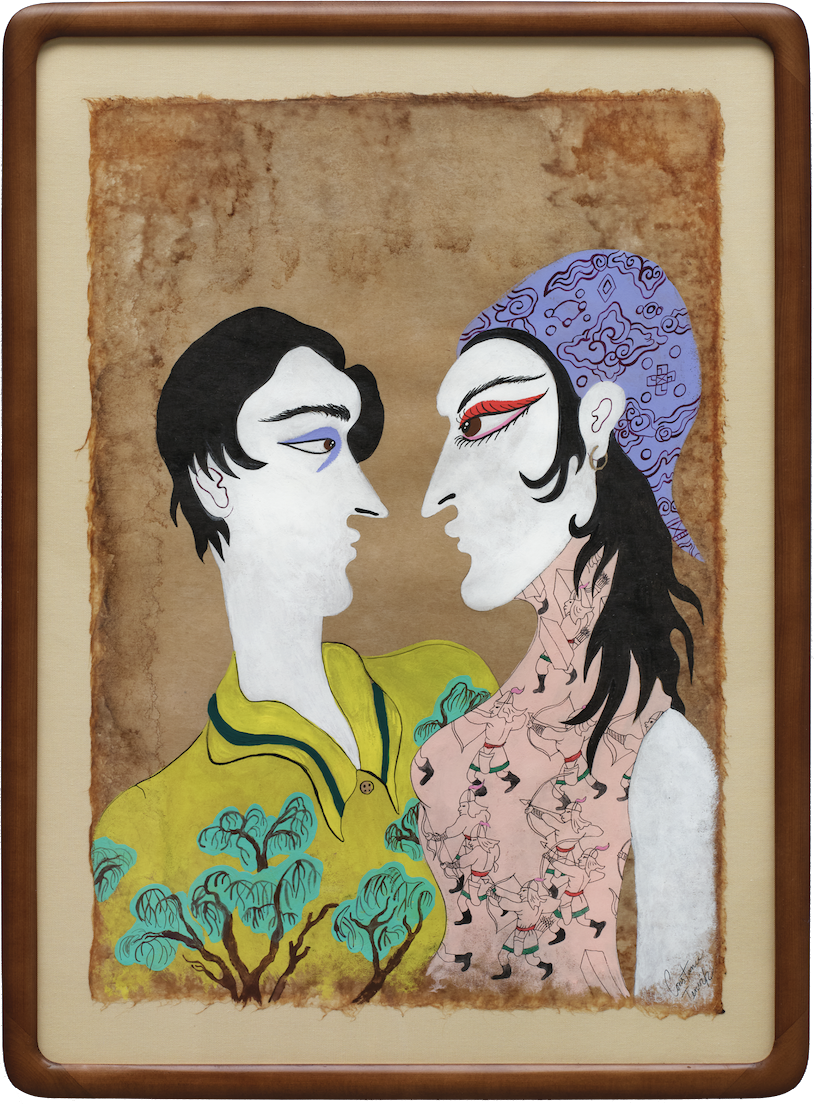
Hunters, 2026. Ink and gouache on Korean paper (hanji), 46 × 32 cm without frame. Photo: Chul lim Choi
This new group of works began during Tenvik’s 2026 residency at MMCA Changdong in Seoul. Over two months, she made her way through the city’s temples, museums, galleries, markets, restaurants, tea houses, and artists’ studios. At the National Museum of Korea, she was particularly drawn to ink painting, ceramics, embroidery, and textiles. She bought brushes, ink, and hanji, the Korean paper that became central to the series. Its fibers catch the brush and interfere with a perfect line. Washes sink in, stains linger, and the irregular edges make each drawing feel less manufactured than lived with.
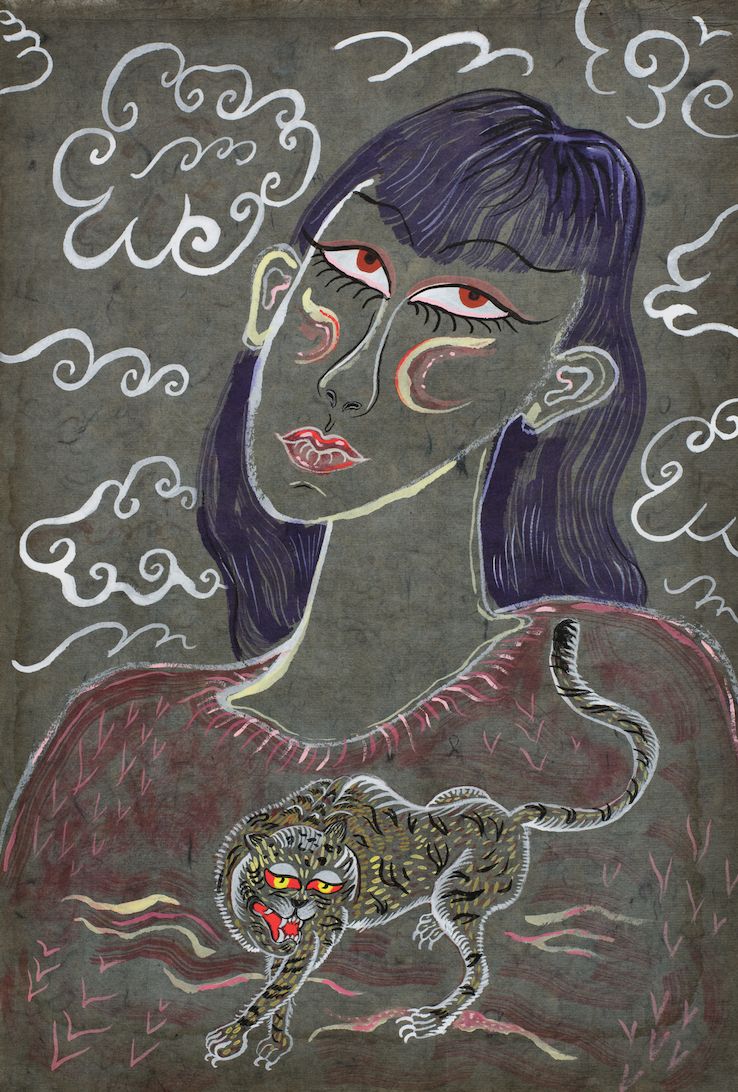
Tenvik also became fascinated by the ten symbols of longevity: sun, clouds, mountains, water, rocks, pine trees, turtles, deer, cranes, and mushrooms of immortality—a useful cast for anyone hoping to outlast the party. In these drawings, the symbols refuse to behave like respectable emblems. They mingle with bodies, clothes, and smoke. In Pensées (2026), clouds gather around a woman’s head while a tiger prowls across her chest. In the three works Clouds, Hunters, and Embrace (all 2026), mountains climb sleeves, mushrooms colonize a dress, and exhaled smoke returns as weather. Ancient signs find themselves recruited into contemporary scenes of flirtation, appetite, and self-invention.
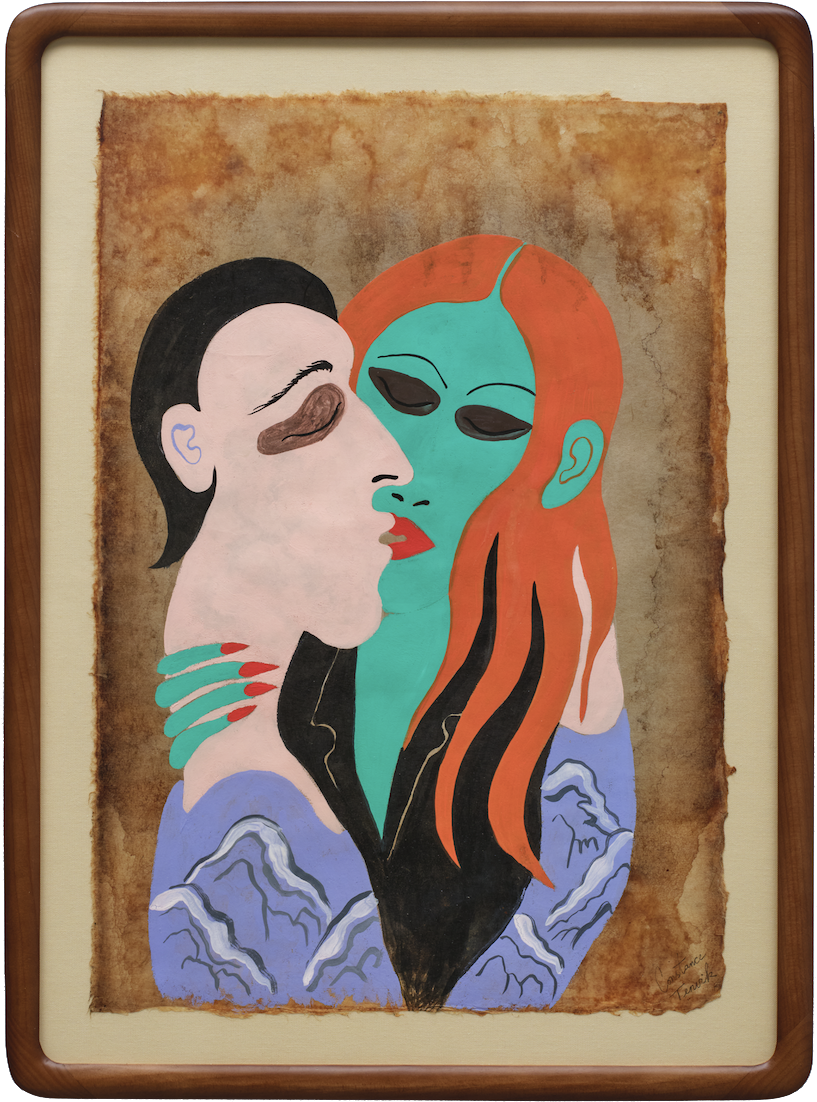
Embrace, 2026. Ink and gouache on Korean paper (hanji), 46 × 32 cm without frame. Photo: Chul lim Choi
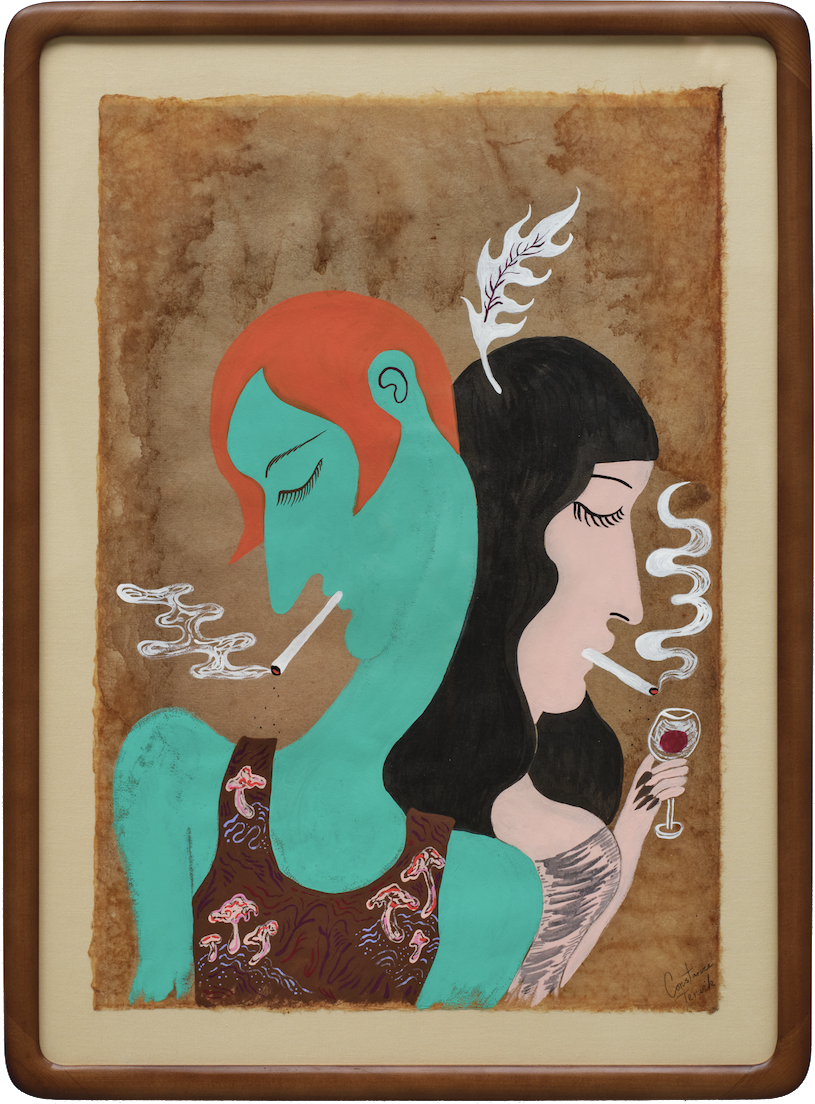
Clouds, 2026. Ink and gouache on Korean paper (hanji), 46 × 32 cm without frame. Photo: Chul lim Choi
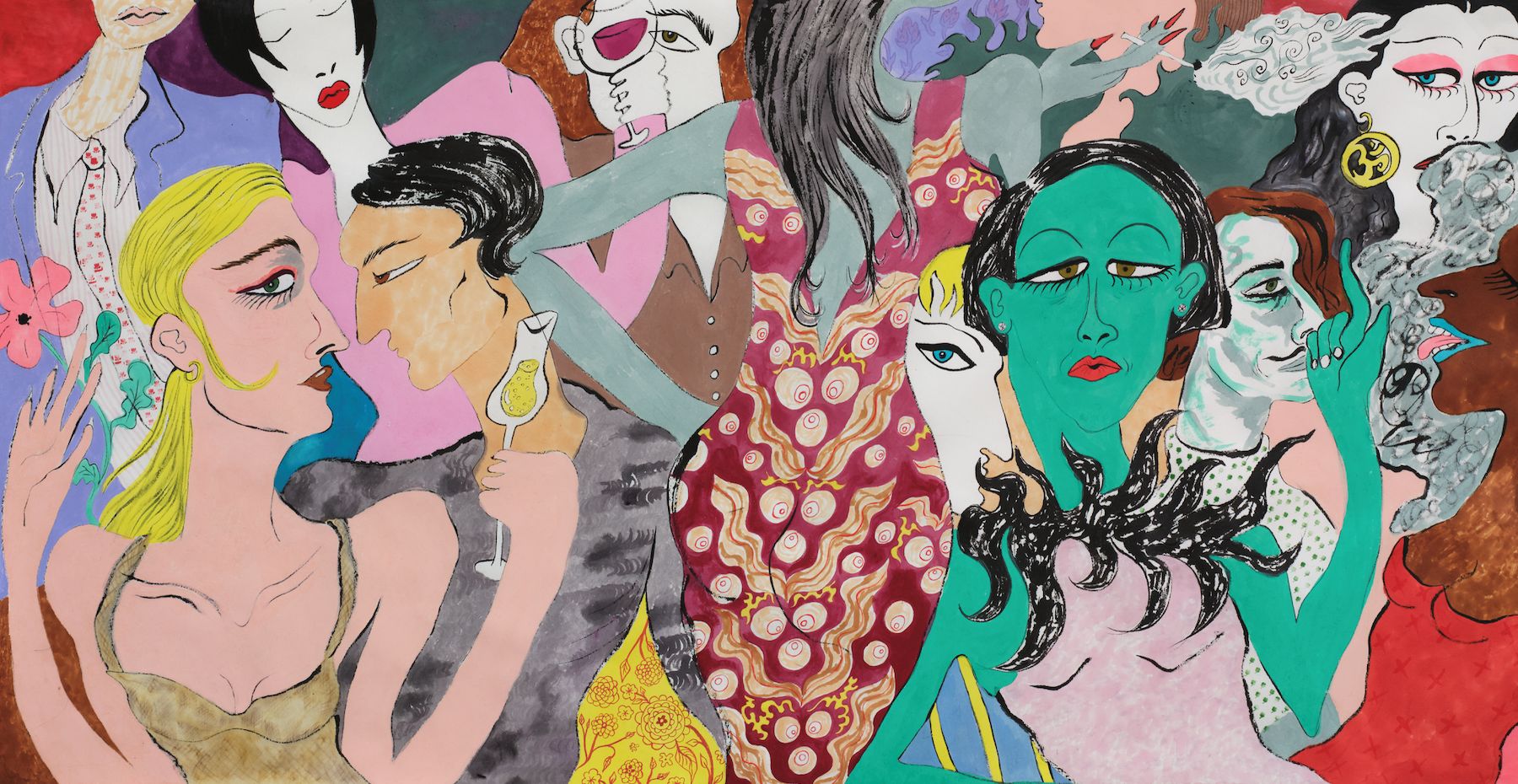
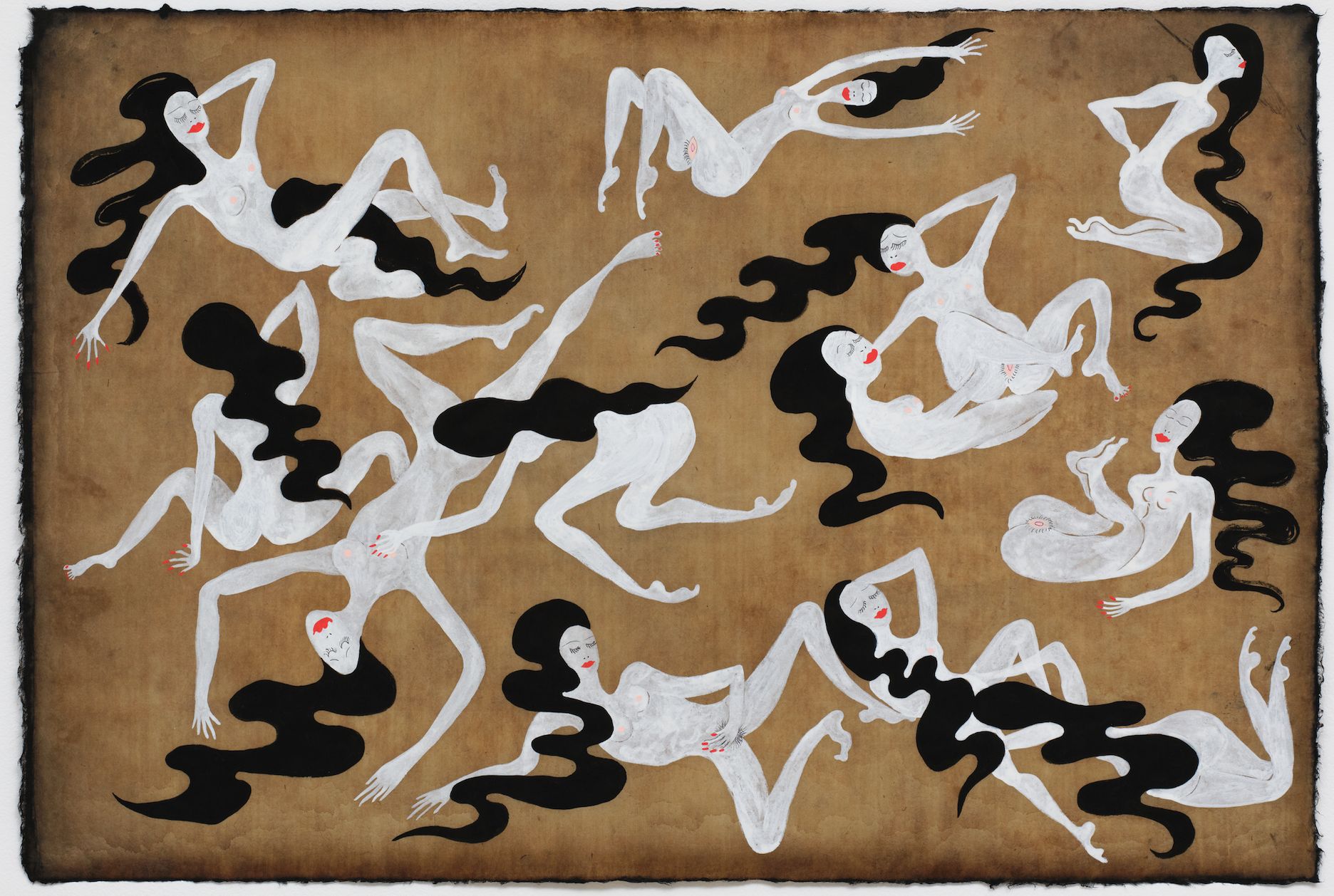
A Foggy Evening (2026) finds the series at its most crowded. Faces, hands, glasses, patterned clothes, and coils of smoke jostle for room. It has the nervous energy of a party where everyone is watching everyone else—and pretending not to. Pulp (2026) is stranger and quieter. White bodies tumble across dark, lacquered hanji, joined and divided by long black hair. They may be floating, sleeping, falling, or simply enjoying the rare freedom of having misplaced all composure.
The series carries something of what Tenvik encountered in the Korean idea of cheong: warmth built through attachment, kindness, and generosity without expectation. Here, cheong is not a theme waiting to be decoded, but a way of paying attention. Seoul enters the drawings through what Tenvik noticed, touched, and received. Nothing is neatly explained, and nobody behaves quite as expected. The images remain generous, unruly, funny, and open—full of people trying to reach one another while preserving the pleasure, and occasional inconvenience, of remaining mysterious.
Constance Tenvik (b. 1990, London) currently lives and works in Oslo. She received her BFA from the Academy of Fine Art in Oslo (2014) and her MFA from Yale School of Art (2016). Recent solo exhibitions have taken place at Hoffmann Maler Wallenberg, Panama City (2025); the Munch Museum, Oslo (2024); Harkawik, New York (2023); Anat Ebgi, Los Angeles (2022); Hoffmann Maler Wallenberg, Nice, France (2022); Loyal Gallery, Stockholm (2021); 56 Henry, New York (2020); and the Astrup Fearnley Museum, Oslo (2019), among others.