Facebook
Twitter
WhatsApp
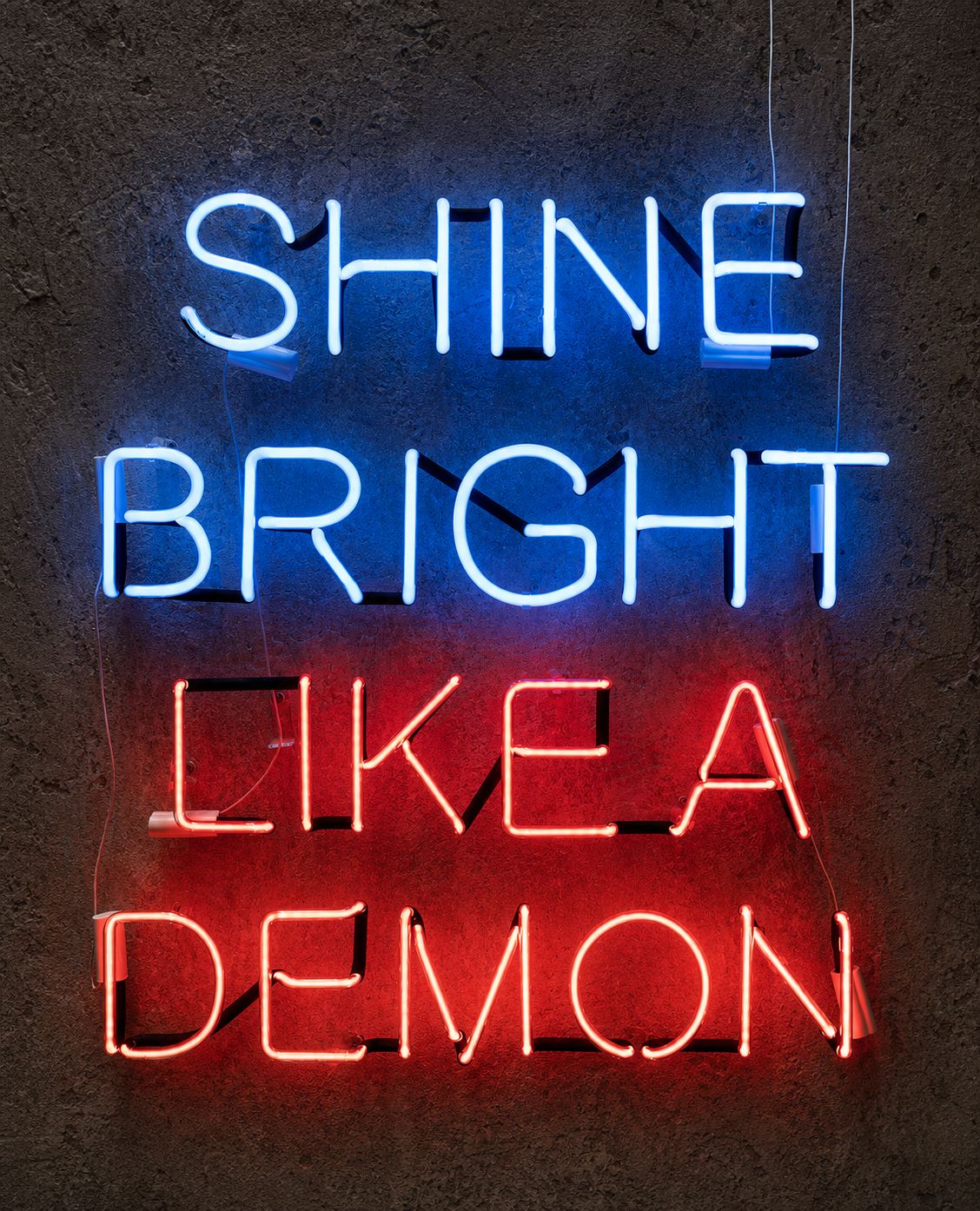
Adriana Martínez Barón’s neon works, produced between 2016 and 2026, reduce her broader concerns with value, circulation, and exchange to their most immediate form: language. Each phrase appears as a signal, borrowing the visual authority of advertising while quietly undoing it. Brief, emphatic, and immediately legible, the works seem to offer the certainty of a slogan. Yet the longer one remains with them, the less stable that certainty becomes.
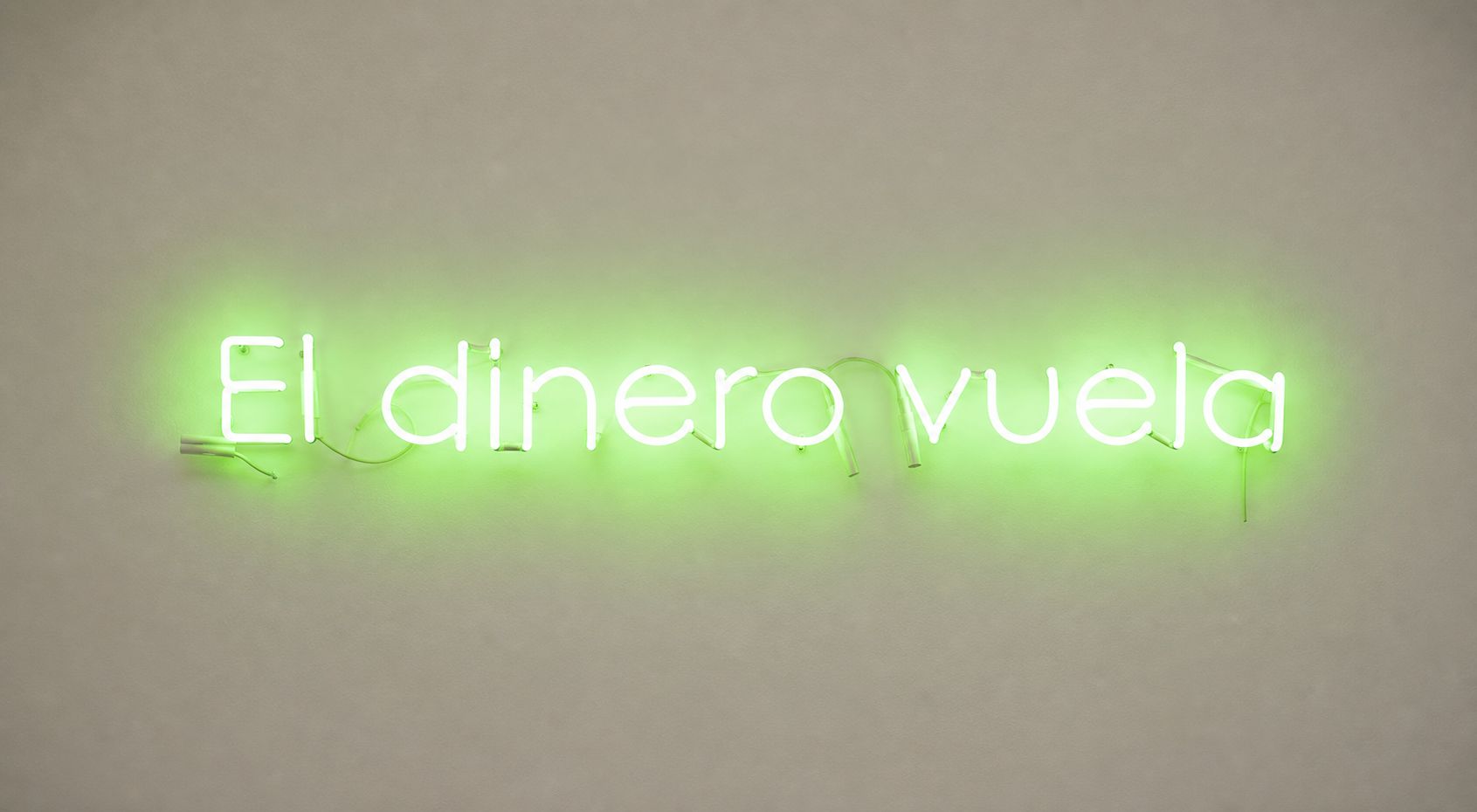
Neon, a medium historically tied to visibility, persuasion, and commercial desire, is here turned inward. The works neither instruct nor seduce in any conventional sense. They hover. Todo lo que brilla es información (All That Shines Is Information, 2016) and El dinero vuela (Money Flies, 2023) read like familiar expressions, yet resist resolution. Their apparent directness gives way to ambiguity, exposing how meaning moves, detaches itself from its original context, and accumulates value, much like money itself.
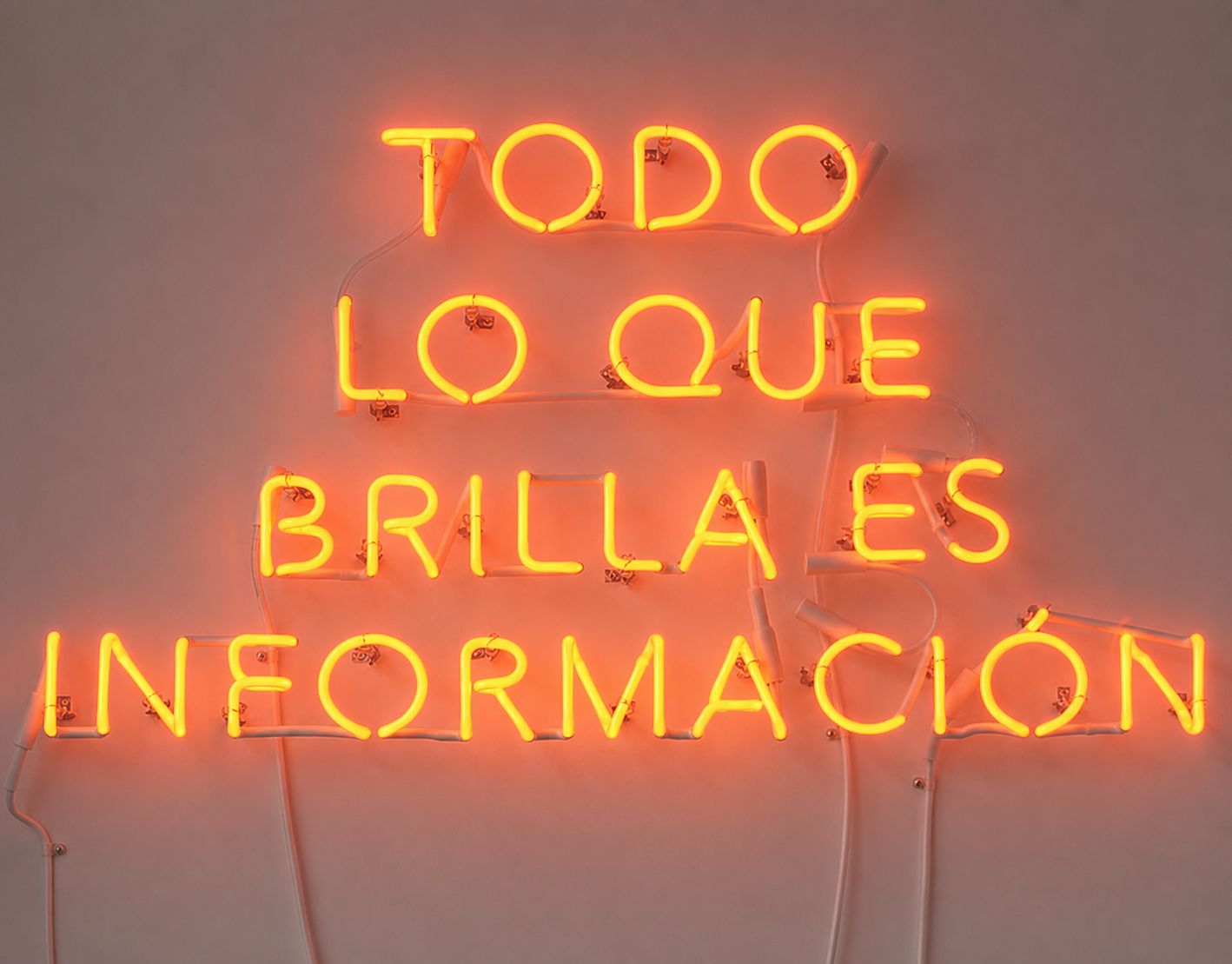
Todo lo que brilla es información (All That Shines Is Information), 2016. Neon tubing and electrical components, 56 × 100 cm (22 × 39 in). Edition of 3 plus 1 AP
In much of Latin America, neon has long been a practical and economical medium, used for storefronts, bars, pharmacies, restaurants, and informal businesses. It belongs less to spectacle than to necessity: a material of visibility rather than luxury, meant to announce a presence within the density of the street. Martínez Barón draws on this vernacular condition without simply reproducing it. Her works retain the directness of signage but suspend its function. What would normally point, sell, identify, or promise instead lingers, emptied of instruction yet still charged with presence.
This suspension is central to the work. The phrases are recognizable without becoming entirely familiar. They appear to have arrived from elsewhere— from advertising, political rhetoric, popular music, financial language, or everyday speech—but their sources remain unstable. Removed from the situations that would normally give them purpose, they become objects in their own right. Language is no longer merely something to be read; it becomes material, atmosphere, and illumination.
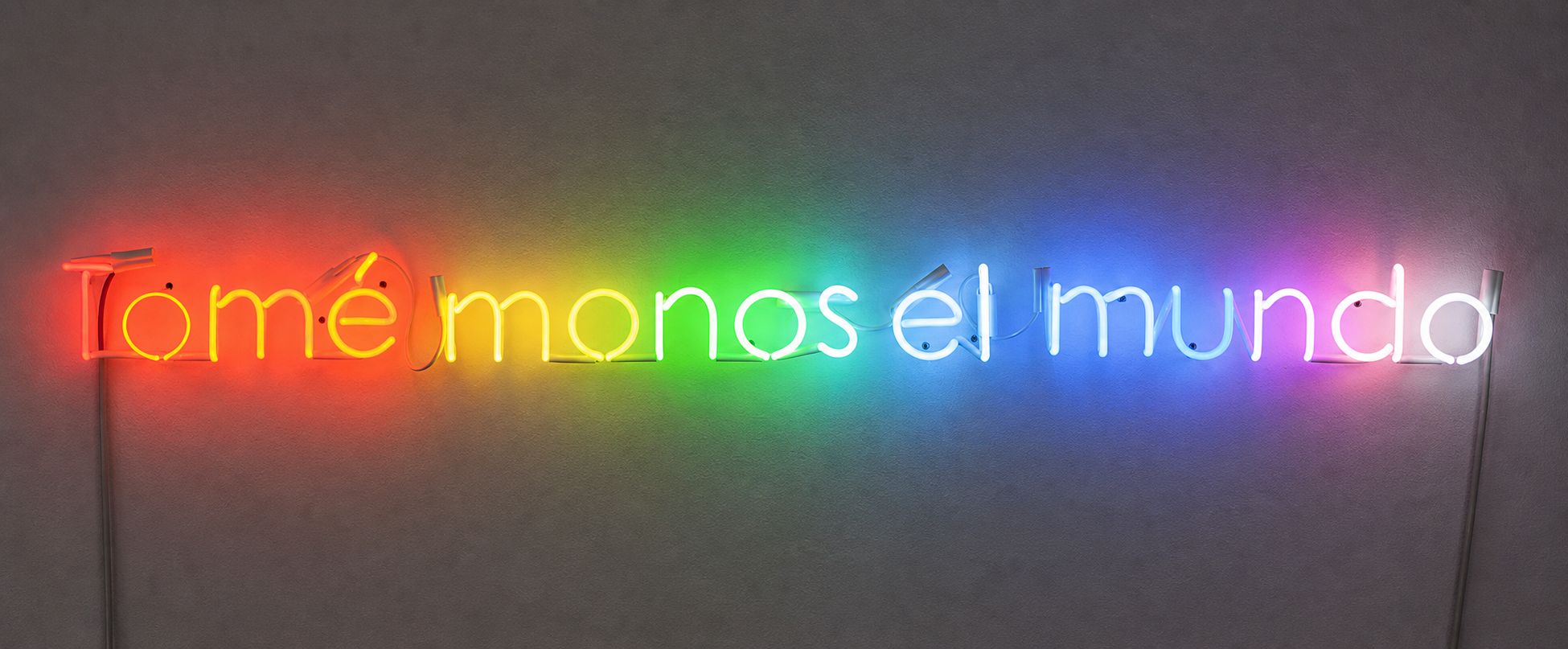
There is no overt declaration and no single position from which the works demand to be understood. Their critique is embedded in tone, in the slight dissonance between message and medium, and in the distance between what a phrase seems to promise and what it actually delivers. Tomémonos el mundo (Let’s Take Over the World, 2024) carries the rhythm of a collective call to action, but its glowing confidence is complicated by the uncertainty of who is speaking and what, precisely, is to be taken. Doscientos pesos oro (Two Hundred Gold Pesos, 2024) names value without enacting it, turning a monetary designation into a strangely abstract proposition. The phrase points toward a system of exchange while withholding the object, transaction, or history that might explain it.
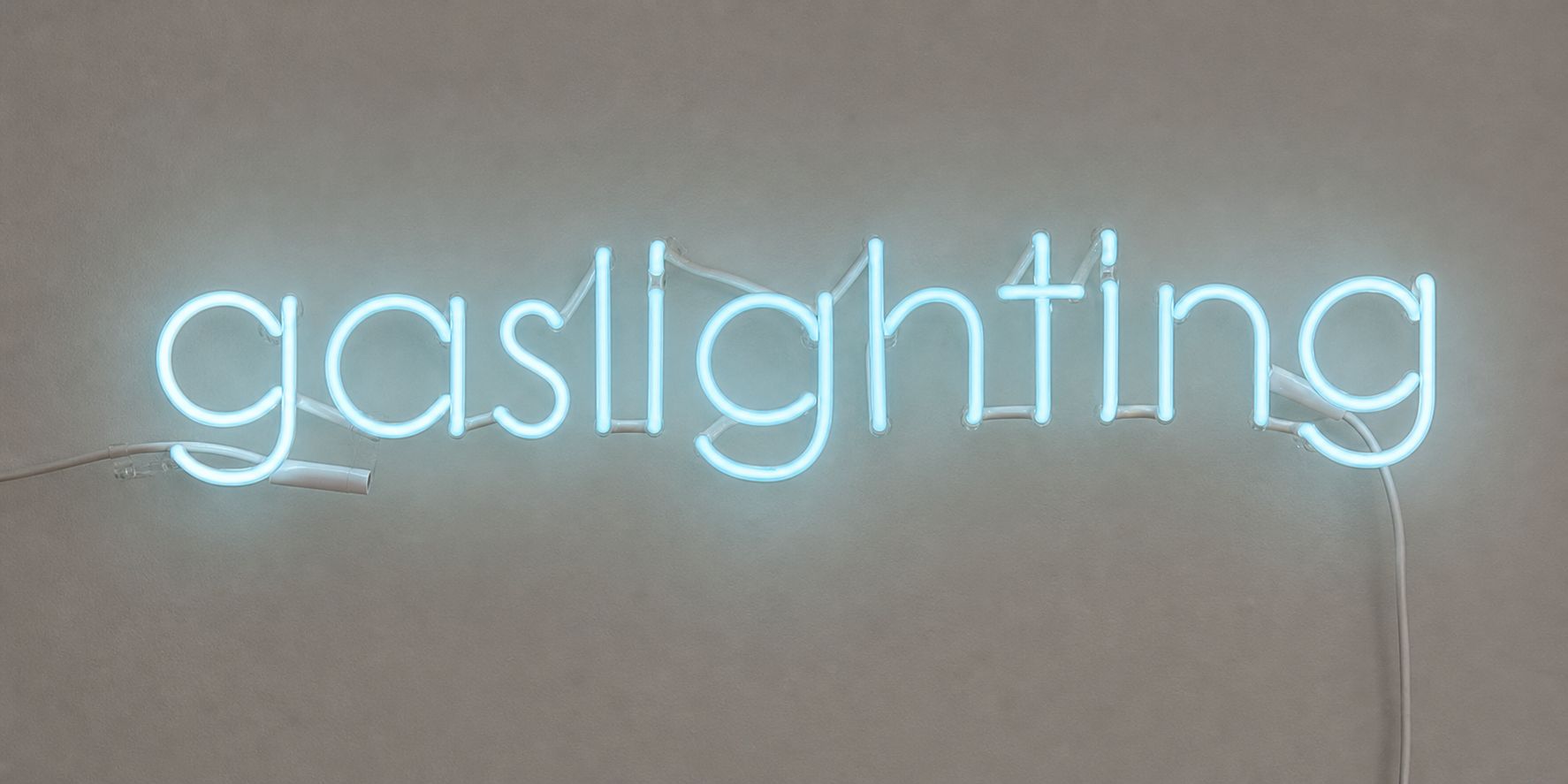
Elsewhere, the language becomes more unstable. Gas Lighting (2025) shifts into the psychological register of manipulation and control, while also returning the phrase to its material components: gas and light. What has become a familiar term for psychological coercion is made newly literal through the medium in which it appears. Shine Bright Like a Demon (2026), meanwhile, twists the language of affirmation into something darker and more uneasy. The imperative to shine remains, but the promise of radiance has been contaminated. Self-display becomes possession; brightness acquires a shadow.
The works move between Spanish and English, local reference and global idiom, without establishing a hierarchy between them. This movement reflects the circulation of contemporary language itself: Phrases travel, are translated, repeated, commodified, and gradually separated from their origins. Martínez Barón does not attempt to restore those origins. Instead, she holds the phrases at the moment when familiarity begins to fracture and language becomes visible as a structure—something shaped by economies, technologies, and habits of repetition.
Taken together, the works form a sparse vocabulary. Not a narrative, but a set of signals transmitted across a decade. Their brevity is deceptive. Each phrase opens onto a larger system of associations while refusing to settle into a fixed interpretation. Language, here, does not explain the world or offer a stable account of it. It circulates within it—illuminated, displaced, and slightly off—and therefore becomes newly visible.
Adriana Martínez Barón (b. 1988, Bogotá) is based in San Juan, Puerto Rico, and Bogotá. She studied at the Universidad de los Andes in Bogotá. Her work has been exhibited internationally, including at the Museum of Contemporary Art Detroit; Micki Meng and Hoffmann Maler Wallenberg, Paris; Embajada, San Juan; Hoffmann Maler Wallenberg, Nice, France; Museo de Arte Moderno de Bogotá; Rachel Uffner Gallery, New York; Cristina Guerra, Lisbon; Steve Turner, Los Angeles; DiabloRosso, Panama City; the Jewish Museum, New York; Instituto de Visión, Bogotá; Jessica Silverman, San Francisco; Chicago Manual Style, Chicago, and others.