Artists

Ruda Echeverría

Ruda Echeverría’s work examines the fragile structures through which we organize knowledge, memory, and identity. Across altered books, installations, ceramics, and found materials, he explores how meaning is constructed, internalized, and quietly distorted. What appears stable—history, theory, even personal memory—reveals itself, in his practice, as provisional.

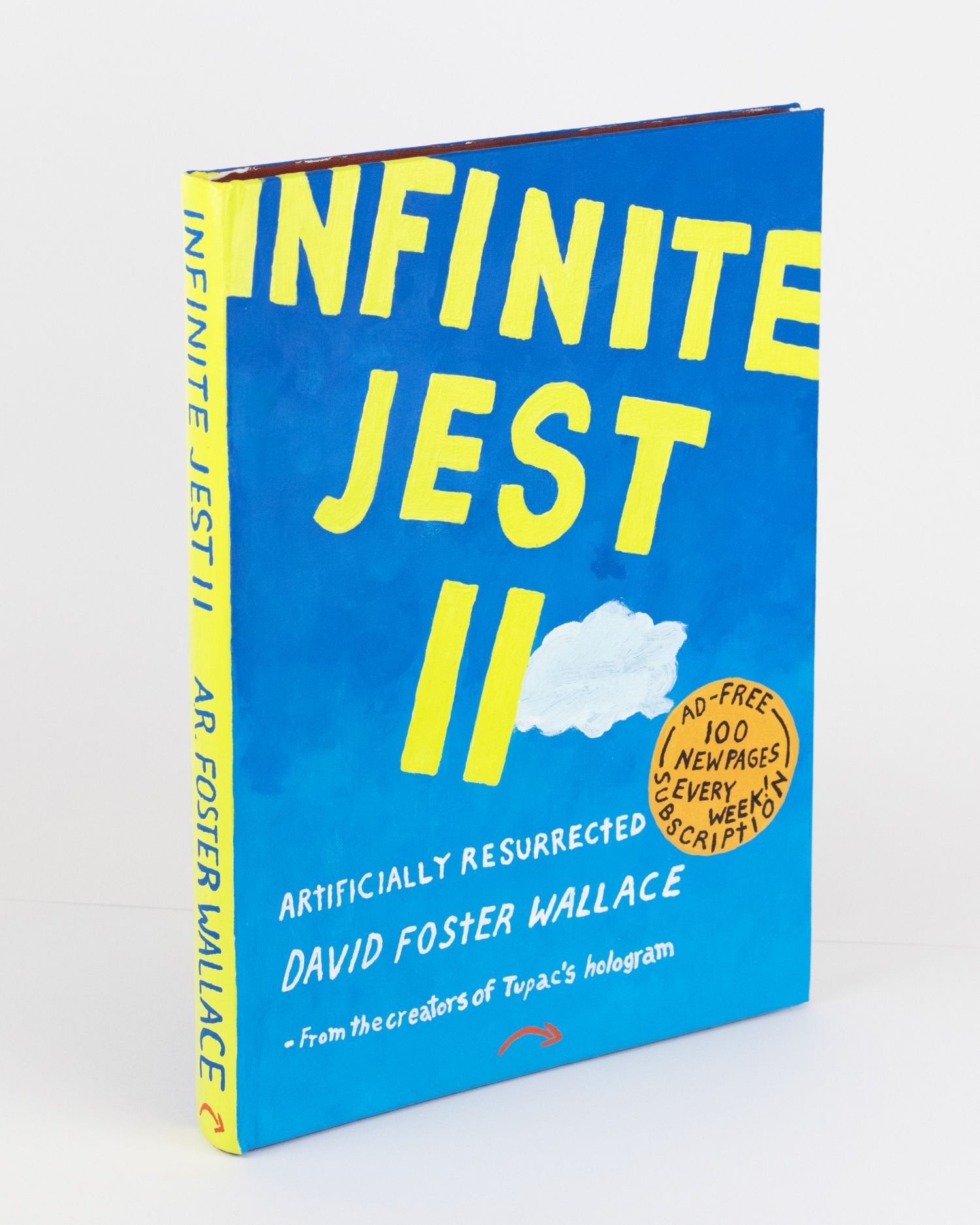
Books and archives recur not as neutral vessels but as instruments of authority. By rewriting, painting over, or subtly recontextualizing them, he exposes how easily categories persuade us. Titles convince before content is read. Genres promise coherence. Echeverría preserves the visual grammar of publishing while withdrawing its guarantees.

His long-term project The Oldest Trick in the Book (2022–26) presents a library composed of artist-altered secondhand volumes. Theory, fiction, self-help, history, and children’s books appear orderly on painted spines, yet their titles drift into ambiguity and absurdity. The installation proposes reading not as accumulation but as residue. What remains from a book is often partial: a phrase misremembered, an emotional tone mistaken for understanding. Knowledge circulates as fragments rather than solid ground.

In earlier works within the series, concealed compartments containing collaged objects, what Echeverría has described as “emotional contraband,” registered how reading implants impressions alongside information. Rather than clarifying meaning, these interventions interrupt it. Humor plays a crucial role throughout, oscillating between philosophical gravity and absurdity, revealing how quickly intellectual language can harden into posture or branding.

Displacement forms an undercurrent in Echeverría’s practice. Working between Barcelona and Caracas, the artist approaches the idea of the library not as preservation but as reconstruction. Some volumes echo books once owned; others are books that never existed but might have. Memory becomes fiction assembled from fragments. The result is neither archive nor parody, but an alternate bibliography that acknowledges loss while refusing nostalgia as authenticity.

Echeverría’s practice resists the contemporary desire for total coherence and stable narratives. Where systems promise certainty, his work insists on partiality. He does not reject reading or theory; he questions the belief that they will hold still if arranged correctly. What emerges is a sustained reflection on how we build worlds from fragments—and how fragile those constructions always are.

Ruda Echeverría (b. 1985, London) lives and works between Barcelona and Caracas. He studied law at Universidad Metropolitana, Caracas (2010), completed a master’s degree in international law at Universidad Complutense, Madrid (2011), and later trained in ceramic sculpture at Taller Escuela Arte Fuego Cándido Millán, Caracas (2017). His work has been exhibited internationally, including in Barcelona, Madrid, Bogotá, Mexico City, and Caracas, with presentations at Museo Tamayo Arte Contemporáneo, Museo de Arte Contemporáneo del Zulia, and in the Colección Patricia Phelps de Cisneros. He is a cofounder and director of the artist-run space Ssuave 3000, established in Barcelona in 2020.
Ruda Echeverría
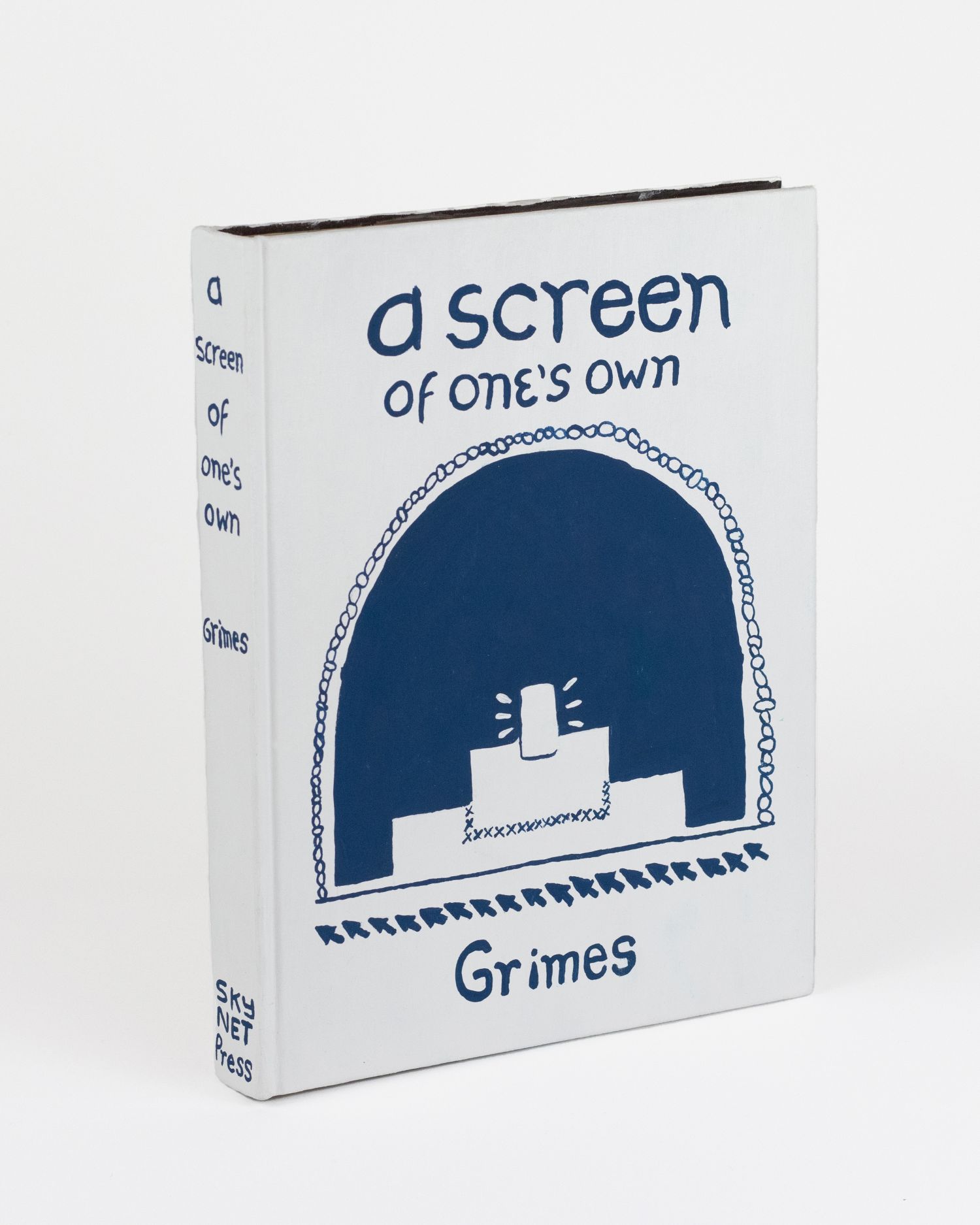
A Screen of One's Own
2025
Acrylic on found book
22 x 29 x 2.5 cm

Ruda Echeverría
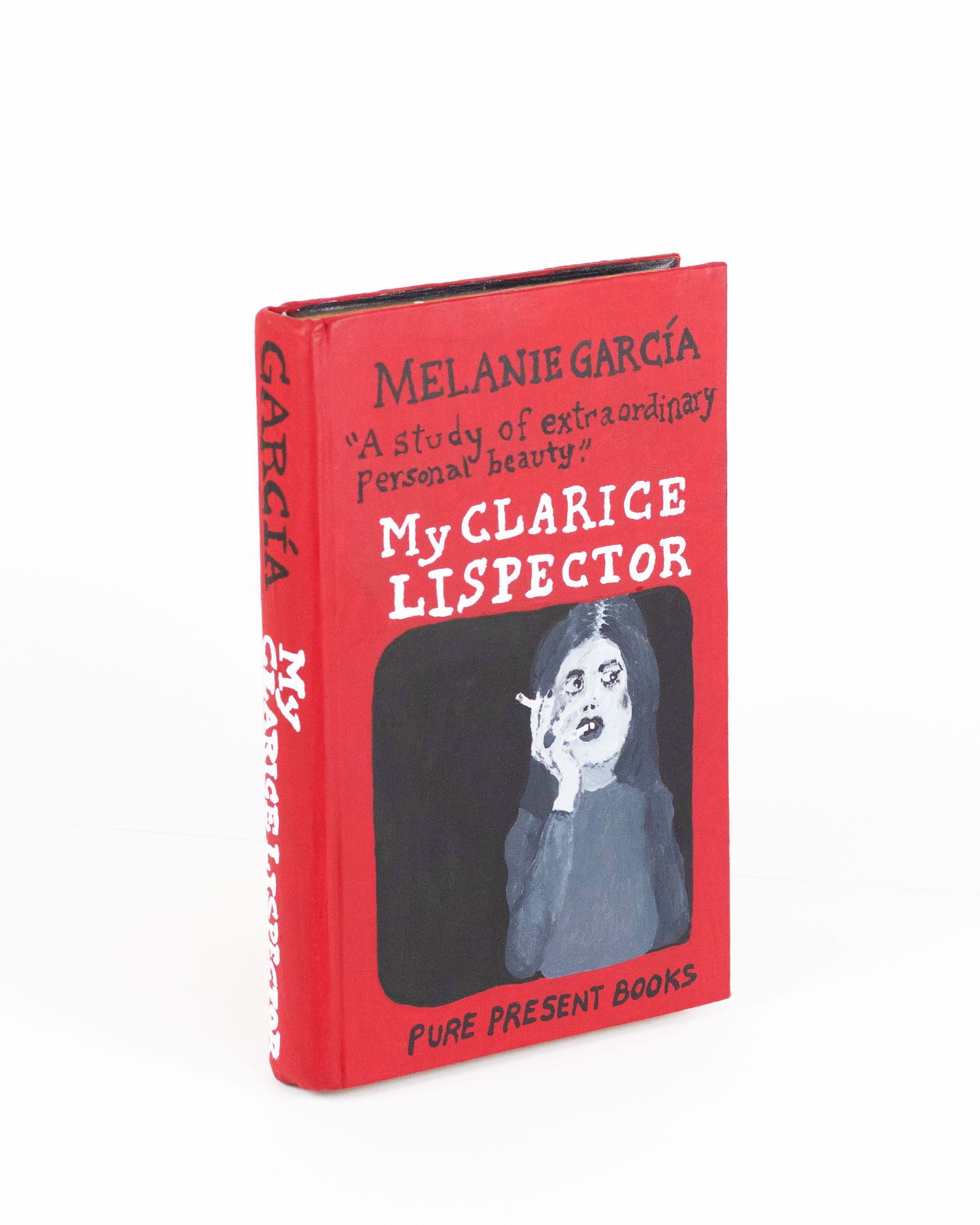
My Clarice Lispector
2025
Acrylic on found book
15 × 23 × 3 cm

Ruda Echeverría
Infinite Jest II
2026
Acrylic on found book
15 × 23 × 3 cm

Ruda Echeverría
A House Is a Witness
2026
Acrylic on found book
24.5 × 29.5 × 2 cm

Ruda Echeverría
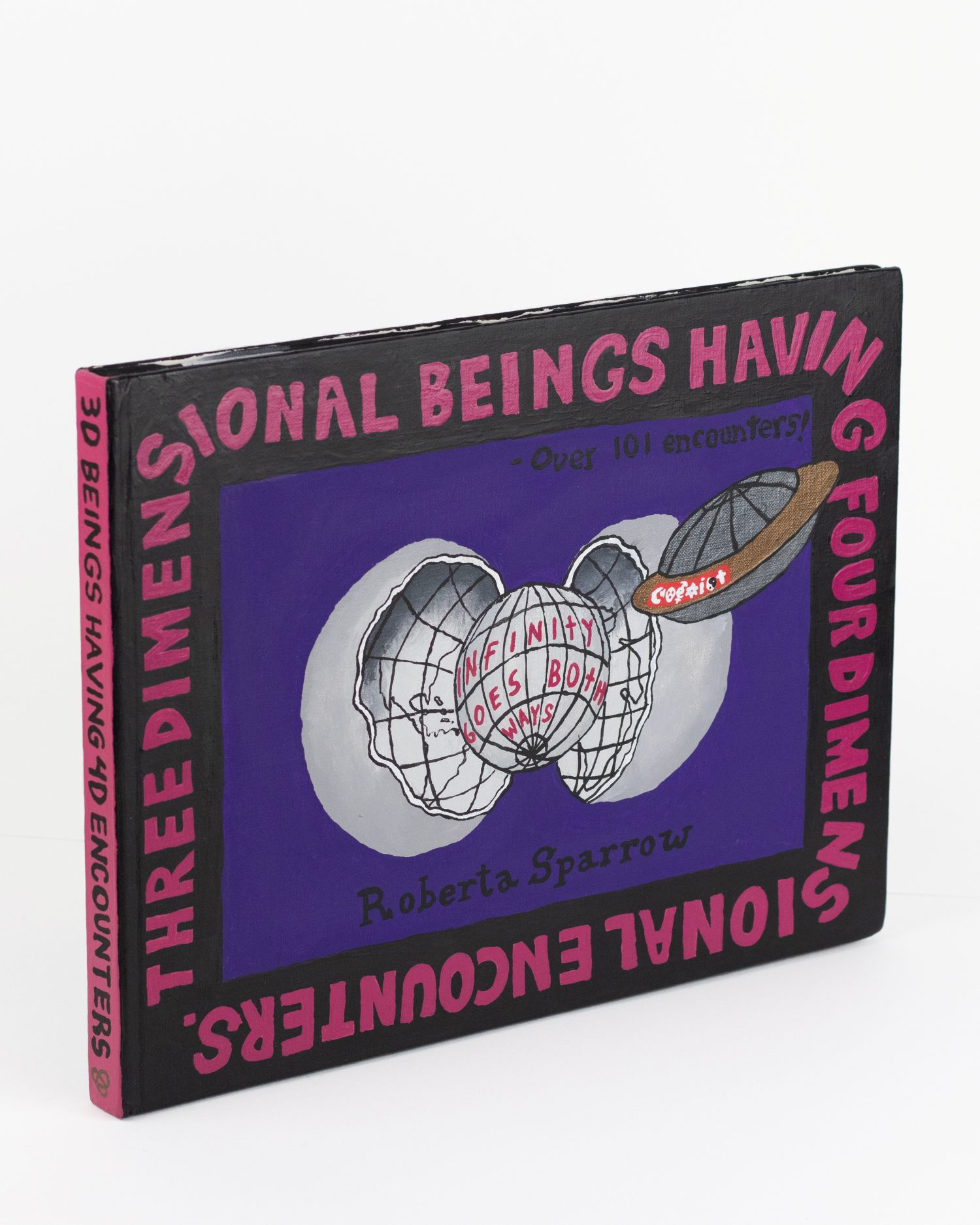
Three-Dimensional Beings Having Four-Dimensional Encounters
2026
Acrylic on found book
32 × 25 × 2 cm

Ruda Echeverría
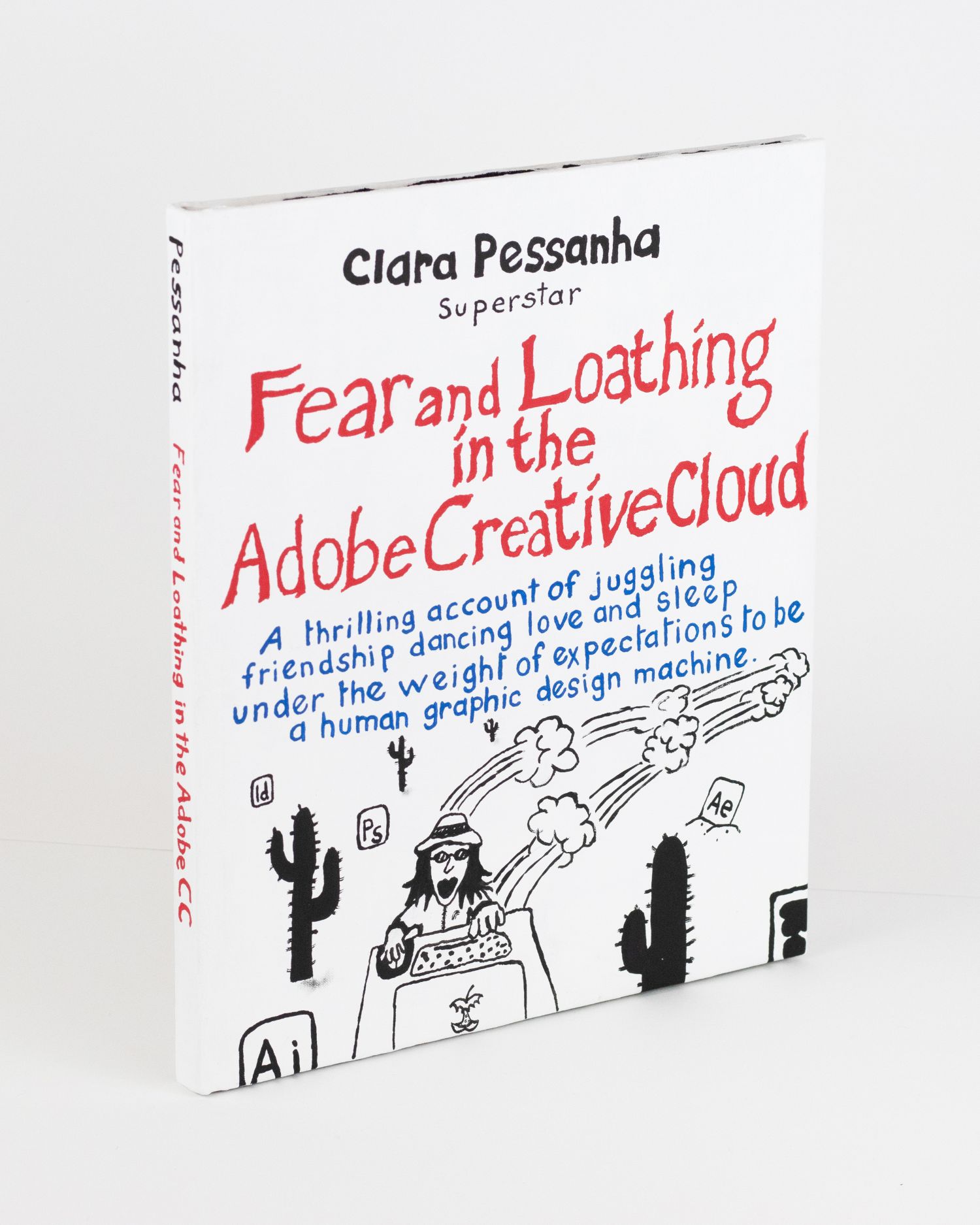
Fear and Loathing in the Adobe Creative Cloud
2026
Acrylic on found book
32 × 25 × 2 cm

Ruda Echeverría

Ruda Echeverría’s work examines the fragile structures through which we organize knowledge, memory, and identity. Across altered books, installations, ceramics, and found materials, he explores how meaning is constructed, internalized, and quietly distorted. What appears stable—history, theory, even personal memory—reveals itself, in his practice, as provisional.

Books and archives recur not as neutral vessels but as instruments of authority. By rewriting, painting over, or subtly recontextualizing them, he exposes how easily categories persuade us. Titles convince before content is read. Genres promise coherence. Echeverría preserves the visual grammar of publishing while withdrawing its guarantees.

His long-term project The Oldest Trick in the Book (2022–26) presents a library composed of artist-altered secondhand volumes. Theory, fiction, self-help, history, and children’s books appear orderly on painted spines, yet their titles drift into ambiguity and absurdity. The installation proposes reading not as accumulation but as residue. What remains from a book is often partial: a phrase misremembered, an emotional tone mistaken for understanding. Knowledge circulates as fragments rather than solid ground.

In earlier works within the series, concealed compartments containing collaged objects, what Echeverría has described as “emotional contraband,” registered how reading implants impressions alongside information. Rather than clarifying meaning, these interventions interrupt it. Humor plays a crucial role throughout, oscillating between philosophical gravity and absurdity, revealing how quickly intellectual language can harden into posture or branding.

Displacement forms an undercurrent in Echeverría’s practice. Working between Barcelona and Caracas, the artist approaches the idea of the library not as preservation but as reconstruction. Some volumes echo books once owned; others are books that never existed but might have. Memory becomes fiction assembled from fragments. The result is neither archive nor parody, but an alternate bibliography that acknowledges loss while refusing nostalgia as authenticity.

Echeverría’s practice resists the contemporary desire for total coherence and stable narratives. Where systems promise certainty, his work insists on partiality. He does not reject reading or theory; he questions the belief that they will hold still if arranged correctly. What emerges is a sustained reflection on how we build worlds from fragments—and how fragile those constructions always are.

Ruda Echeverría (b. 1985, London) lives and works between Barcelona and Caracas. He studied law at Universidad Metropolitana, Caracas (2010), completed a master’s degree in international law at Universidad Complutense, Madrid (2011), and later trained in ceramic sculpture at Taller Escuela Arte Fuego Cándido Millán, Caracas (2017). His work has been exhibited internationally, including in Barcelona, Madrid, Bogotá, Mexico City, and Caracas, with presentations at Museo Tamayo Arte Contemporáneo, Museo de Arte Contemporáneo del Zulia, and in the Colección Patricia Phelps de Cisneros. He is a cofounder and director of the artist-run space Ssuave 3000, established in Barcelona in 2020.
Ruda Echeverría
A Screen of One's Own
2025
Acrylic on found book
22 x 29 x 2.5 cm

Ruda Echeverría
My Clarice Lispector
2025
Acrylic on found book
15 × 23 × 3 cm

Ruda Echeverría
Infinite Jest II
2026
Acrylic on found book
15 × 23 × 3 cm

Ruda Echeverría
A House Is a Witness
2026
Acrylic on found book
24.5 × 29.5 × 2 cm

Ruda Echeverría
Three-Dimensional Beings Having Four-Dimensional Encounters
2026
Acrylic on found book
32 × 25 × 2 cm

Ruda Echeverría
Fear and Loathing in the Adobe Creative Cloud
2026
Acrylic on found book
32 × 25 × 2 cm

Facebook
Twitter
WhatsApp