Facebook
Twitter
WhatsApp


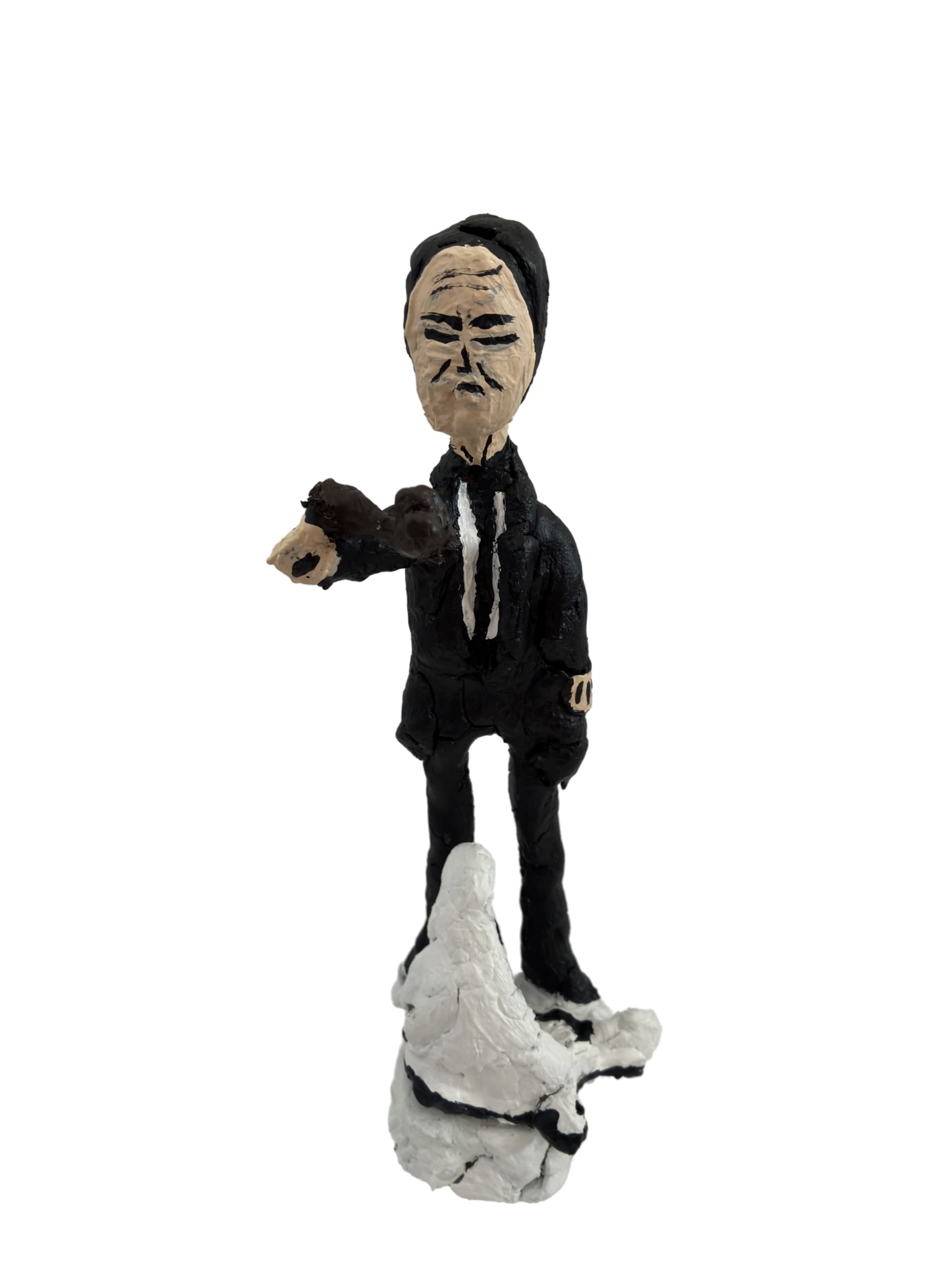
Andres Eidelstein
Pablo
2025
Porcelain polymer, toothpicks, wooden sticks, acrylic paint
24 × 9 × 3 cm (9.5 × 3.5 × 1.2 in.)

Andres Eidelstein
Maurizio
2025
Porcelain polymer, toothpicks, wooden sticks, acrylic paint
25 8.5 × 5.5 cm (9.8 × 3.4 × 2.2 in.)

Andres Eidelstein
Louise
2025
Porcelain polymer, toothpicks, wooden sticks, acrylic paint
26 × 9 × 5 cm (10.2 × 3.5 × 2 in.)

Andres Eidelstein
Marina
2025
Porcelain polymer, toothpicks, wooden sticks, acrylic paint
25 × 9 × 4 cm (9.8 × 3.5 × 1.6 in.)

Andres Eidelstein
Andy
2025
Porcelain polymer, toothpicks, wooden sticks, acrylic paint
25 × 7.5 × 3.5 cm (9.8 × 3 × 1.4 in.)

Andres Eidelstein
Jeff
2025
Porcelain polymer, toothpicks, wooden sticks, acrylic paint
25.5 × 8.5 × 4.5 cm (10 × 3.4 × 1.8 in.)

Andres Eidelstein
Yayoi
2025
Porcelain polymer, toothpicks, wooden sticks, acrylic paint
23.5 × 8.5 × 5 cm (9.3 × 3.4 × 2 in.)


Andres Eidelstein
Jean-Michel
2025
Porcelain polymer, toothpicks, wooden sticks, acrylic paint
27 × 9 × 3.5 cm (10.6 × 3.5 × 1.4 in.)

Andres Eidelstein
Takashi
2025
Porcelain polymer, toothpicks, wooden sticks, acrylic paint
27.5 × 7 × 5 cm (10.8 × 2.8 × 2 in.)

Andres Eidelstein
Marcel
2025
Porcelain polymer, toothpicks, wooden sticks, acrylic paint
26 × 7 × 6 cm (10.2 × 2.8 × 2.4 in.)

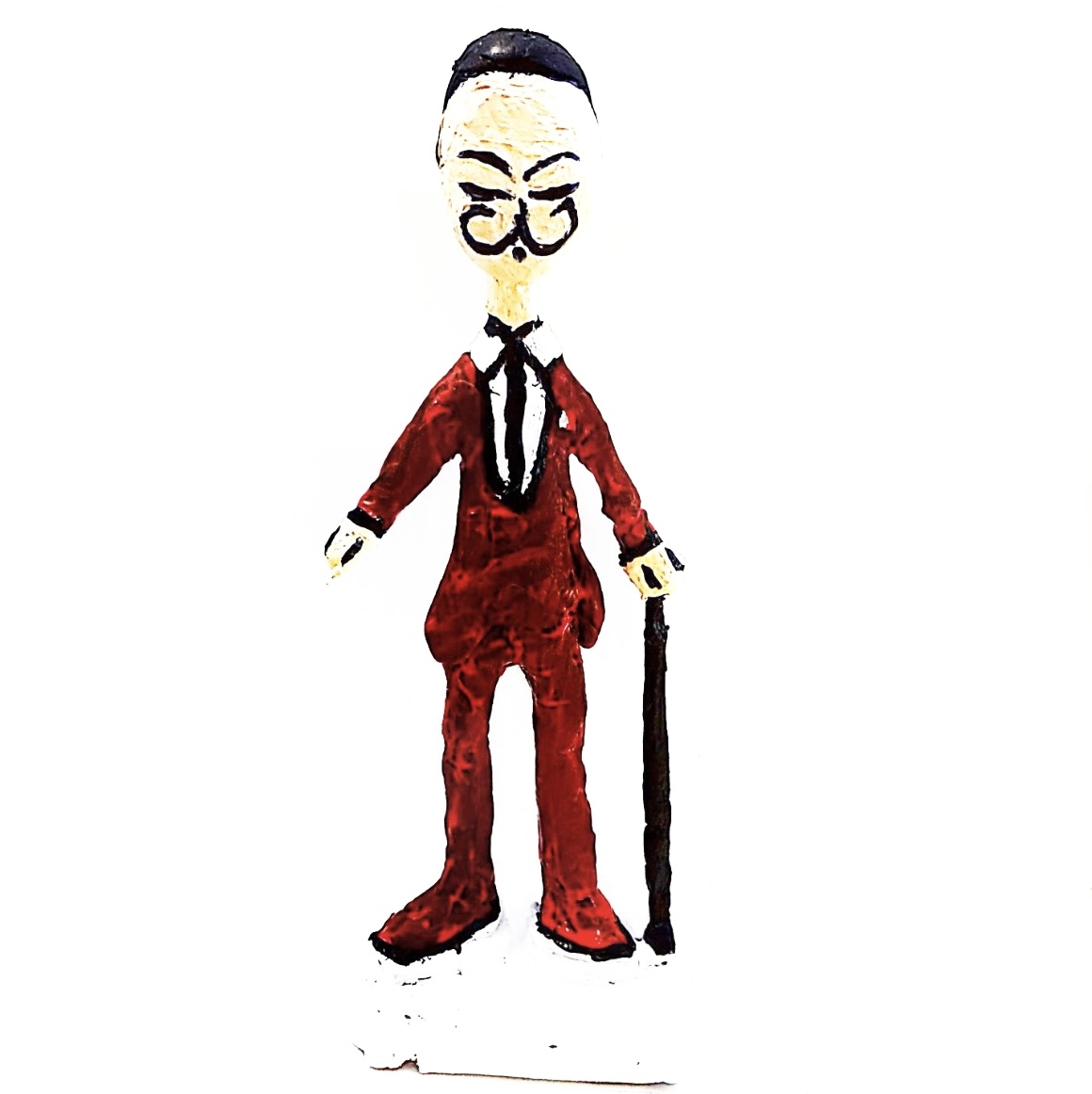
Andres Eidelstein
Salvador
2025
Porcelain polymer, toothpicks, wooden sticks, acrylic paint
25 × 8.5 × 5.5 cm (9.8 × 3.4 × 2.2 in.)

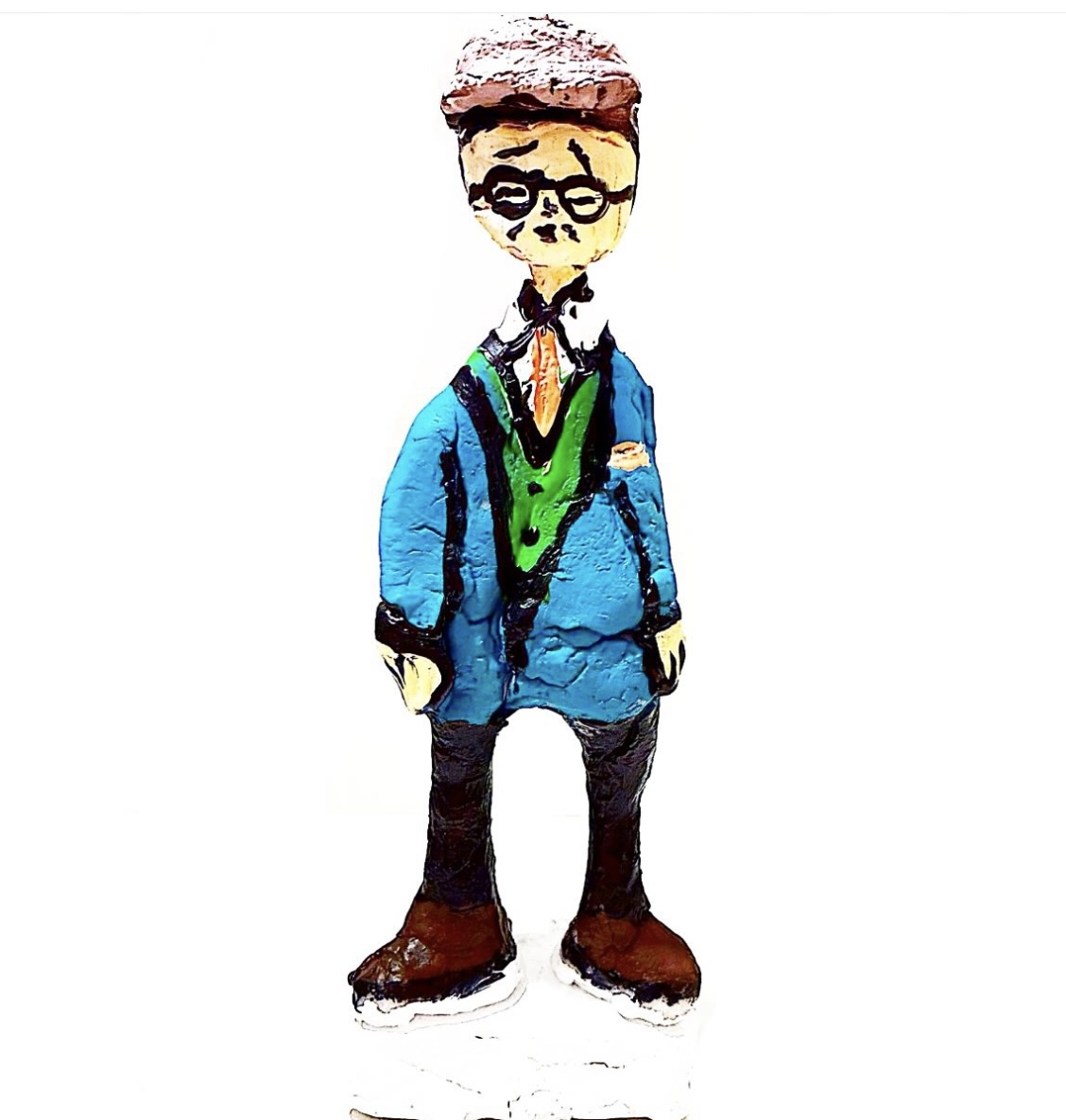
Andres Eidelstein
David
2025
Porcelain polymer, toothpicks, wooden sticks, acrylic paint
25 × 7.5 × 4 cm (9.8 × 3 × 1.6 in.)

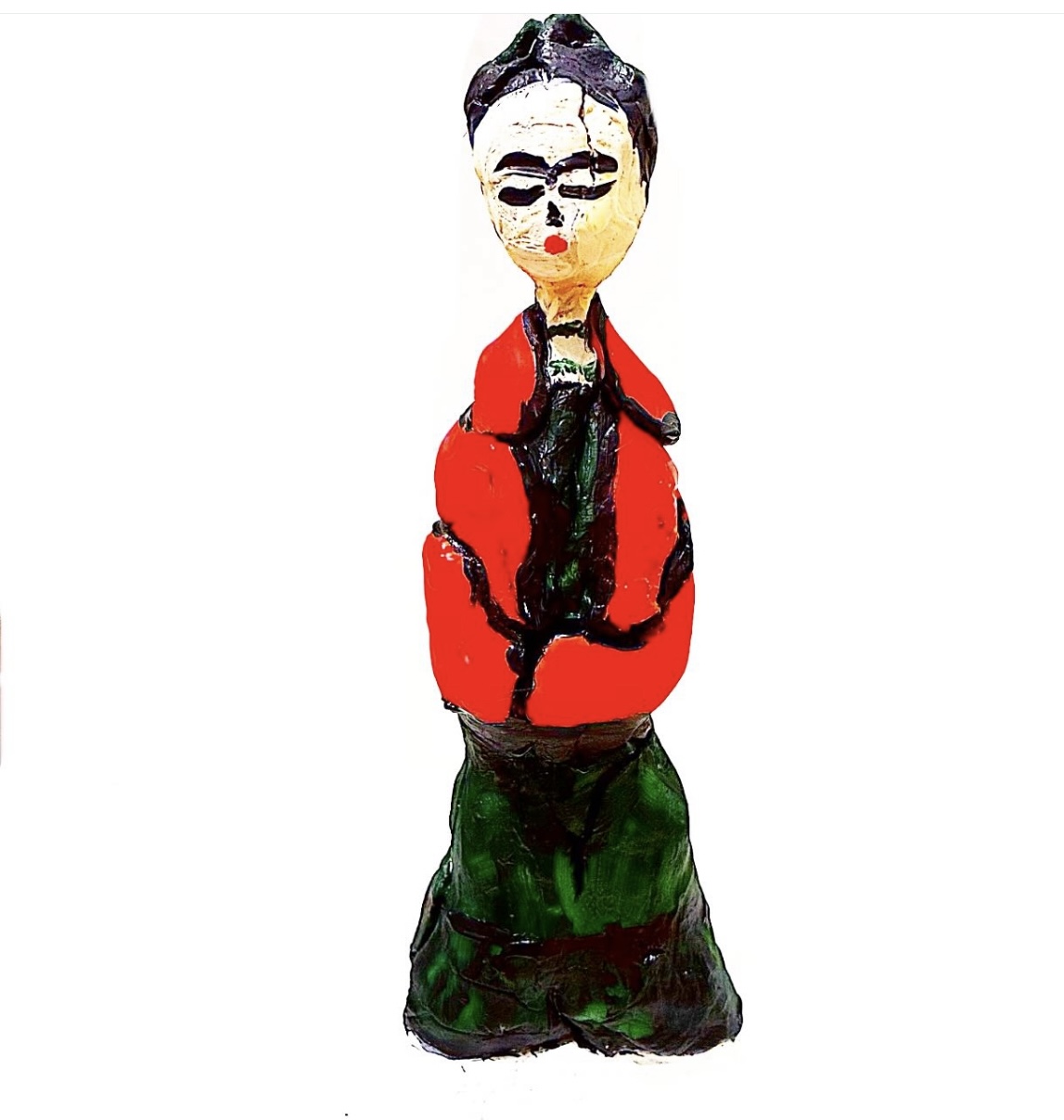
Andres Eidelstein
Frida
2025
Porcelain polymer, toothpicks, wooden sticks, acrylic paint
27 × 8 × 6 cm (10.6 × 3.2 × 2.4 in.)
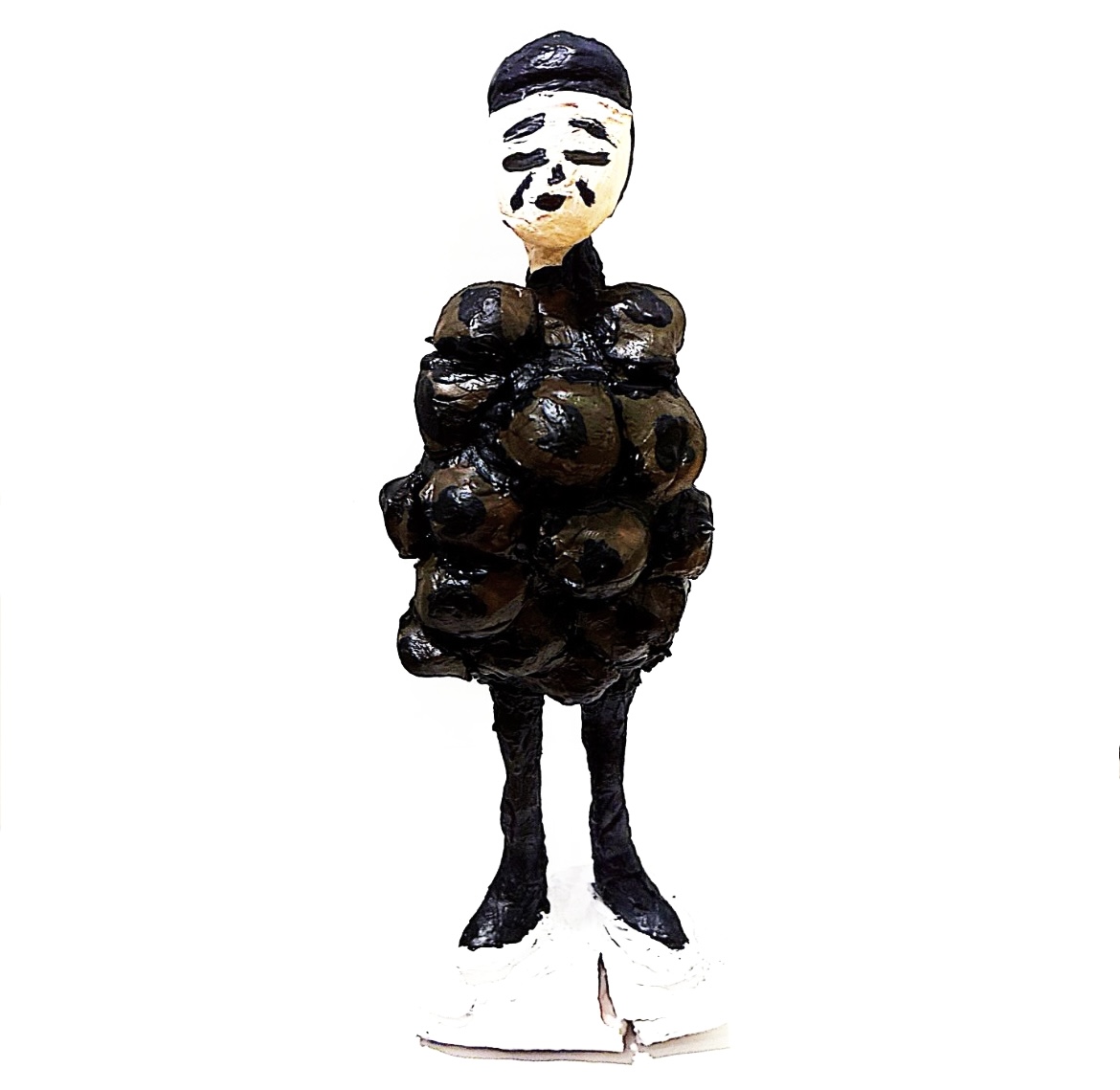
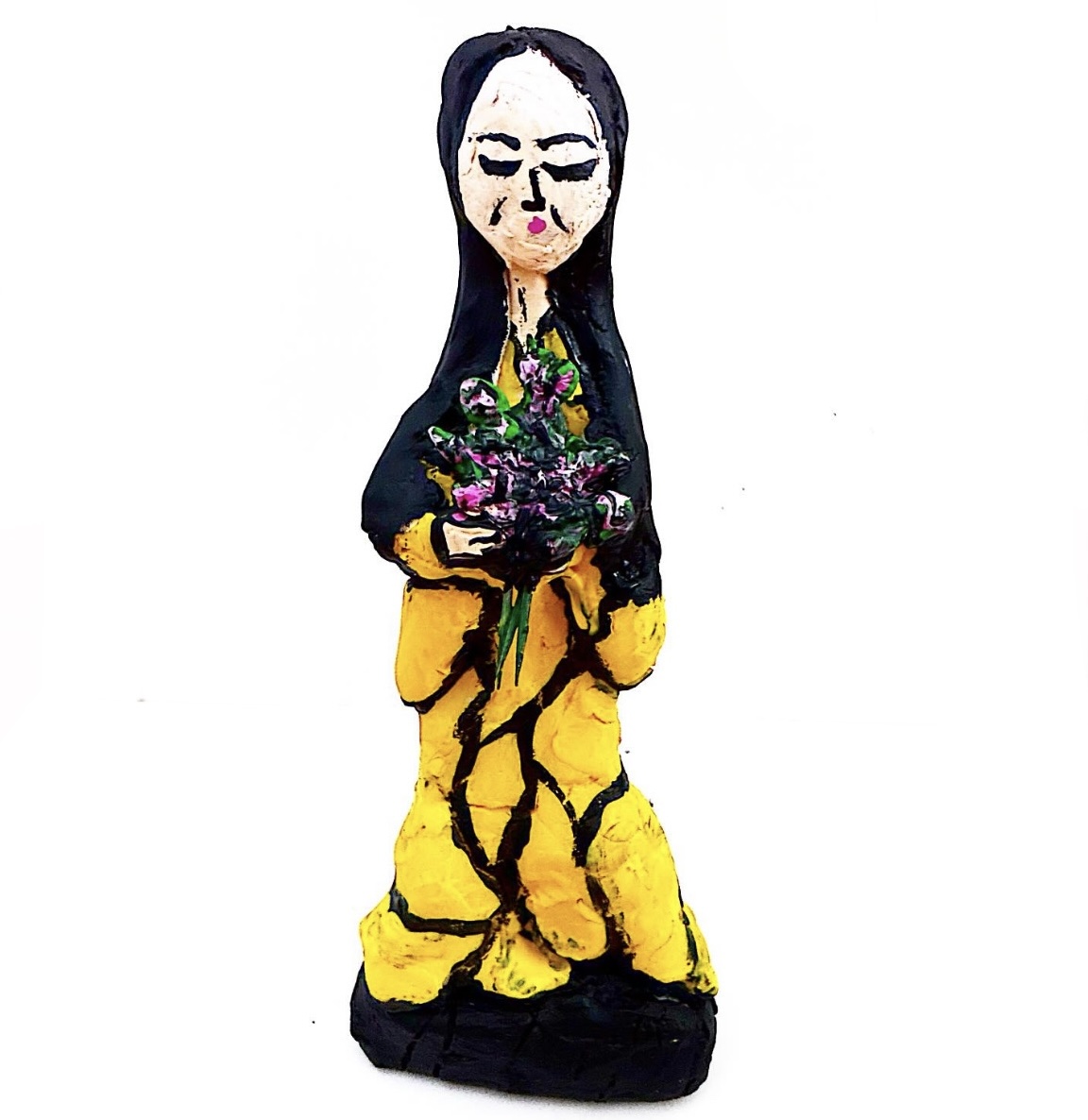
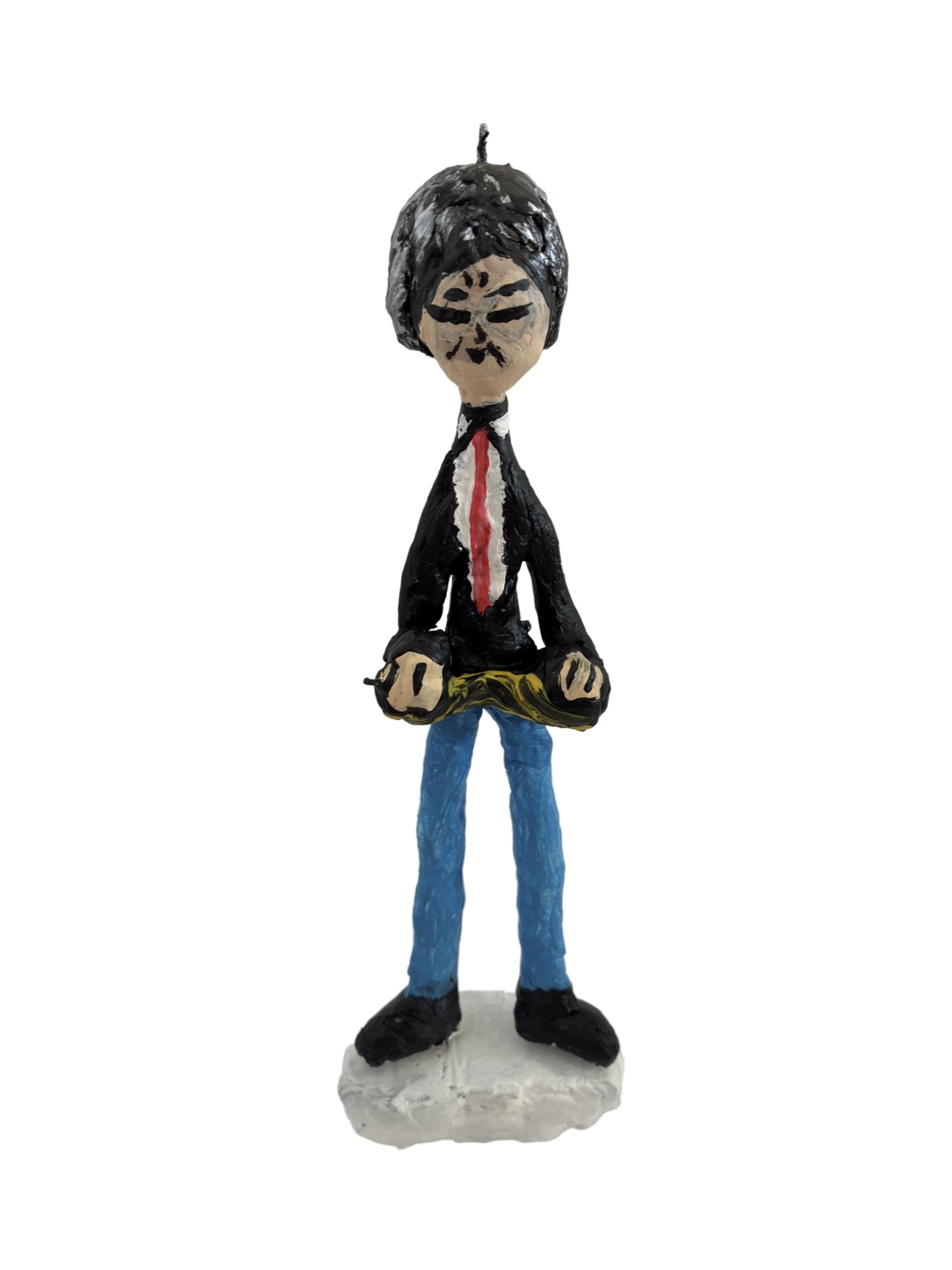
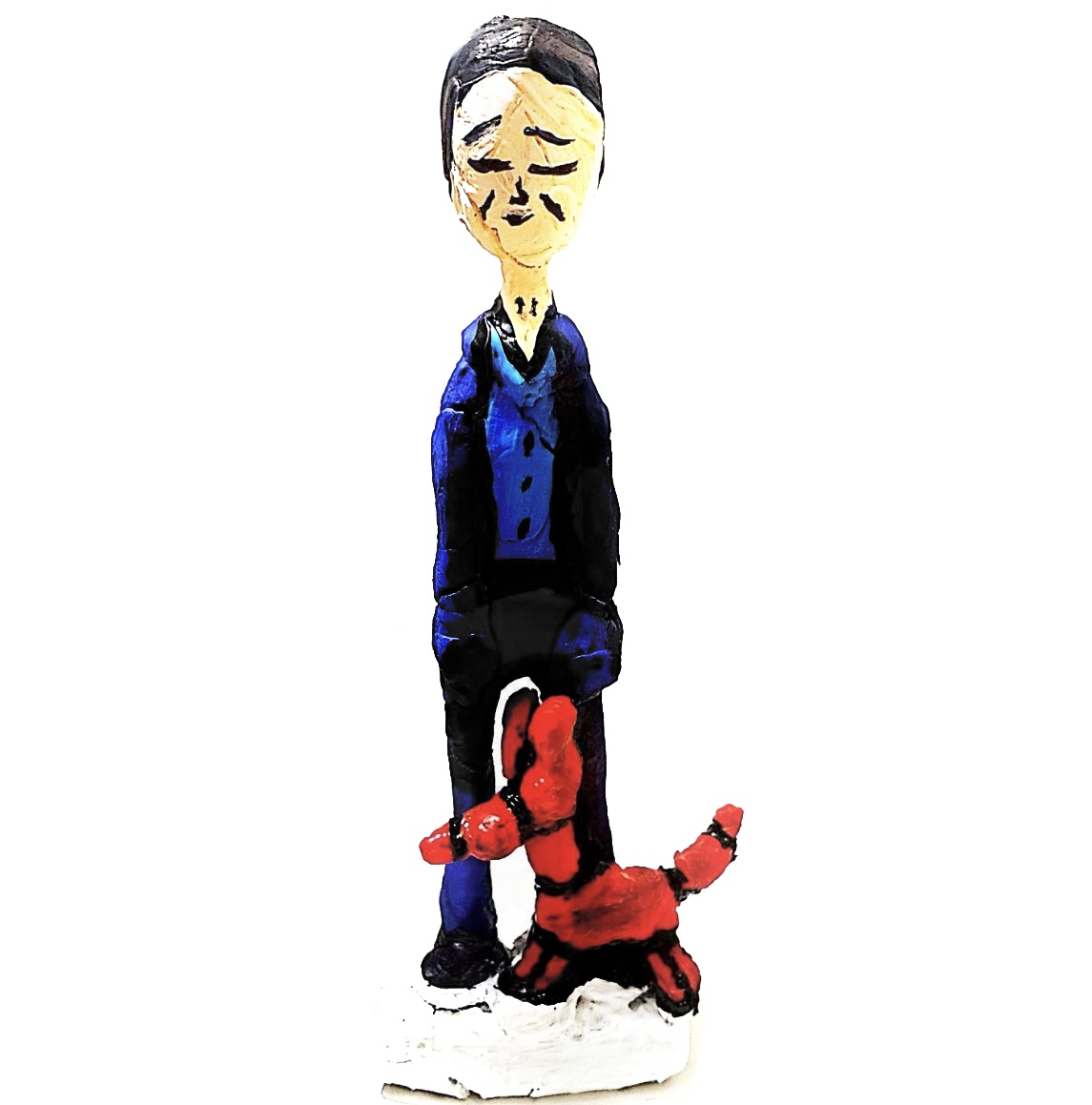
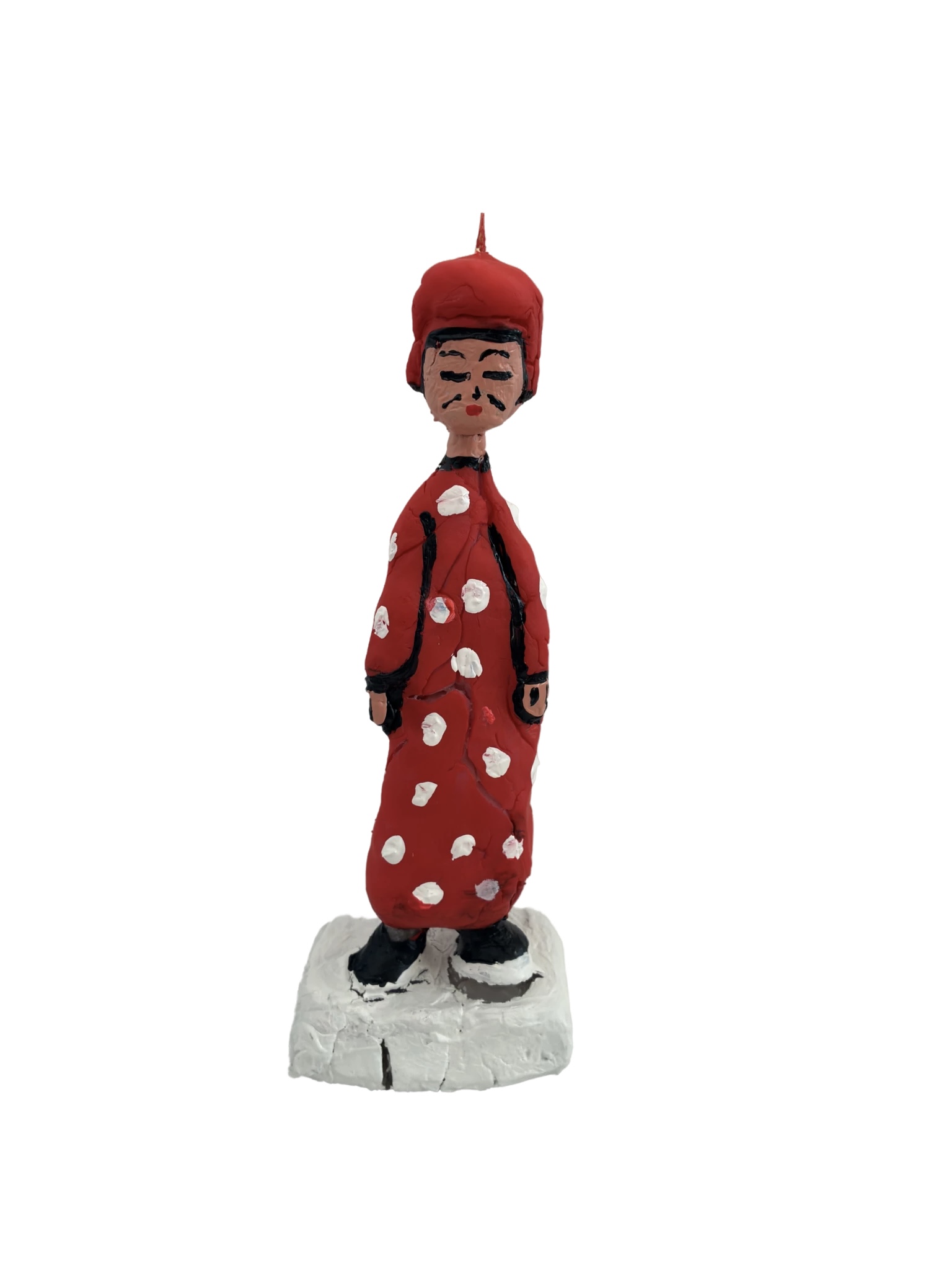
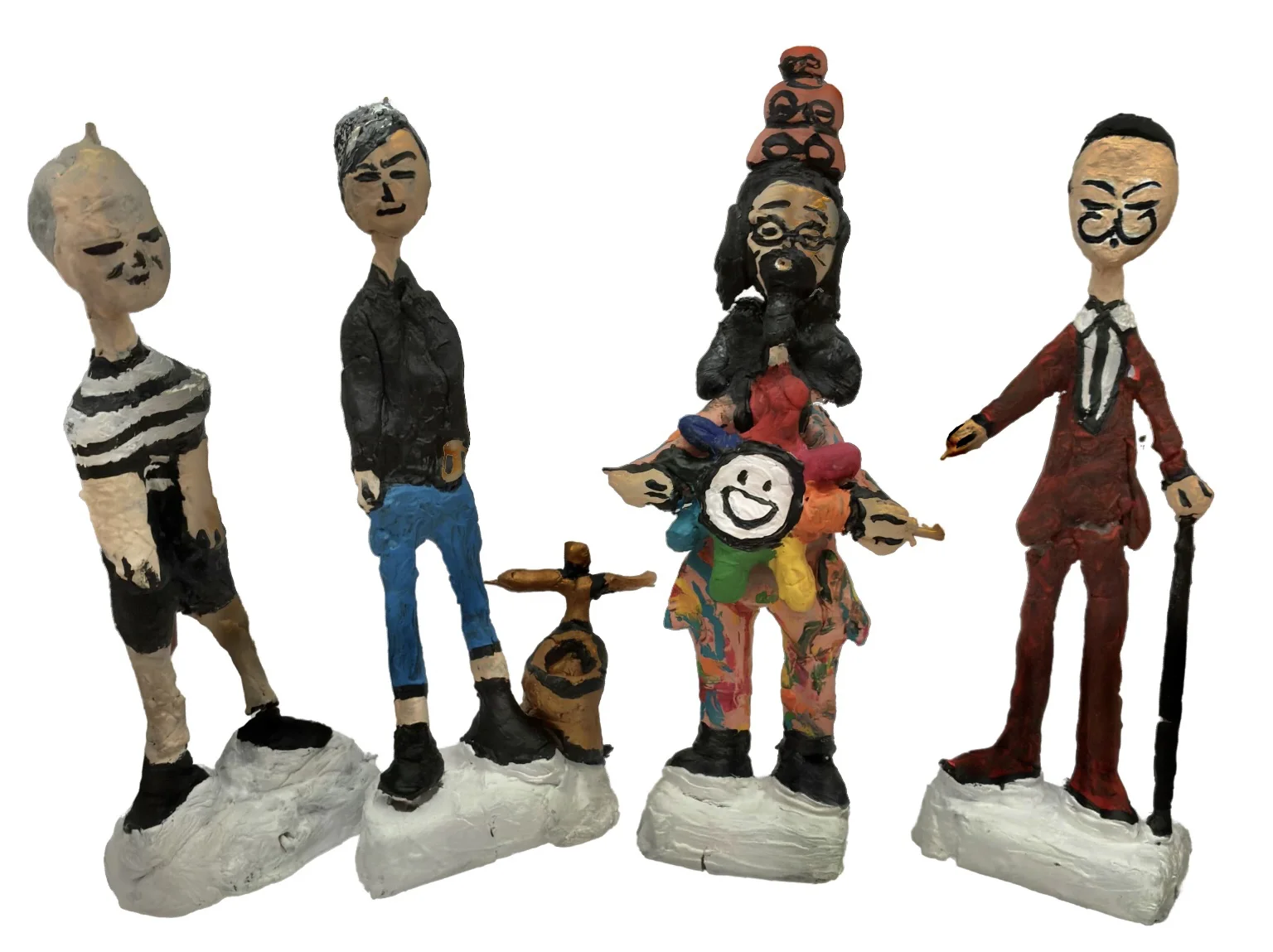
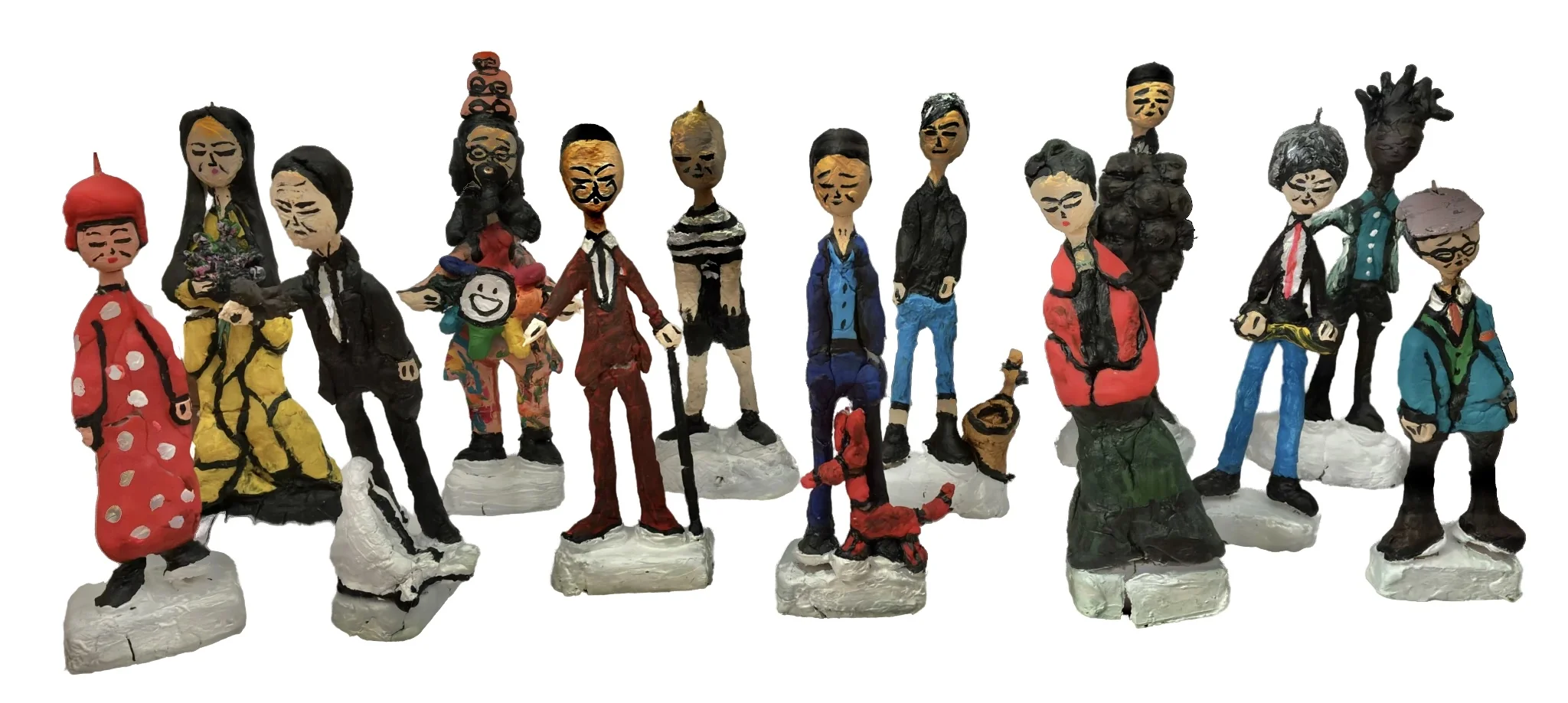
Scholars have spent decades inflating the reputations of artists such as Andy Warhol, Yayoi Kusama, Jean-Michel Basquiat, Marcel Duchamp, Frida Kahlo, Jeff Koons, and others into a kind of cultural weather system—vast, unmanageable, and perpetually self-renewing. Argentine artist Andres Eidelstein does the opposite. He compresses them to approximately twenty-five centimeters, roughly the height of an action figure, or an idol improvised by a particularly imaginative child. The results are both oddly devotional and quietly mutinous.
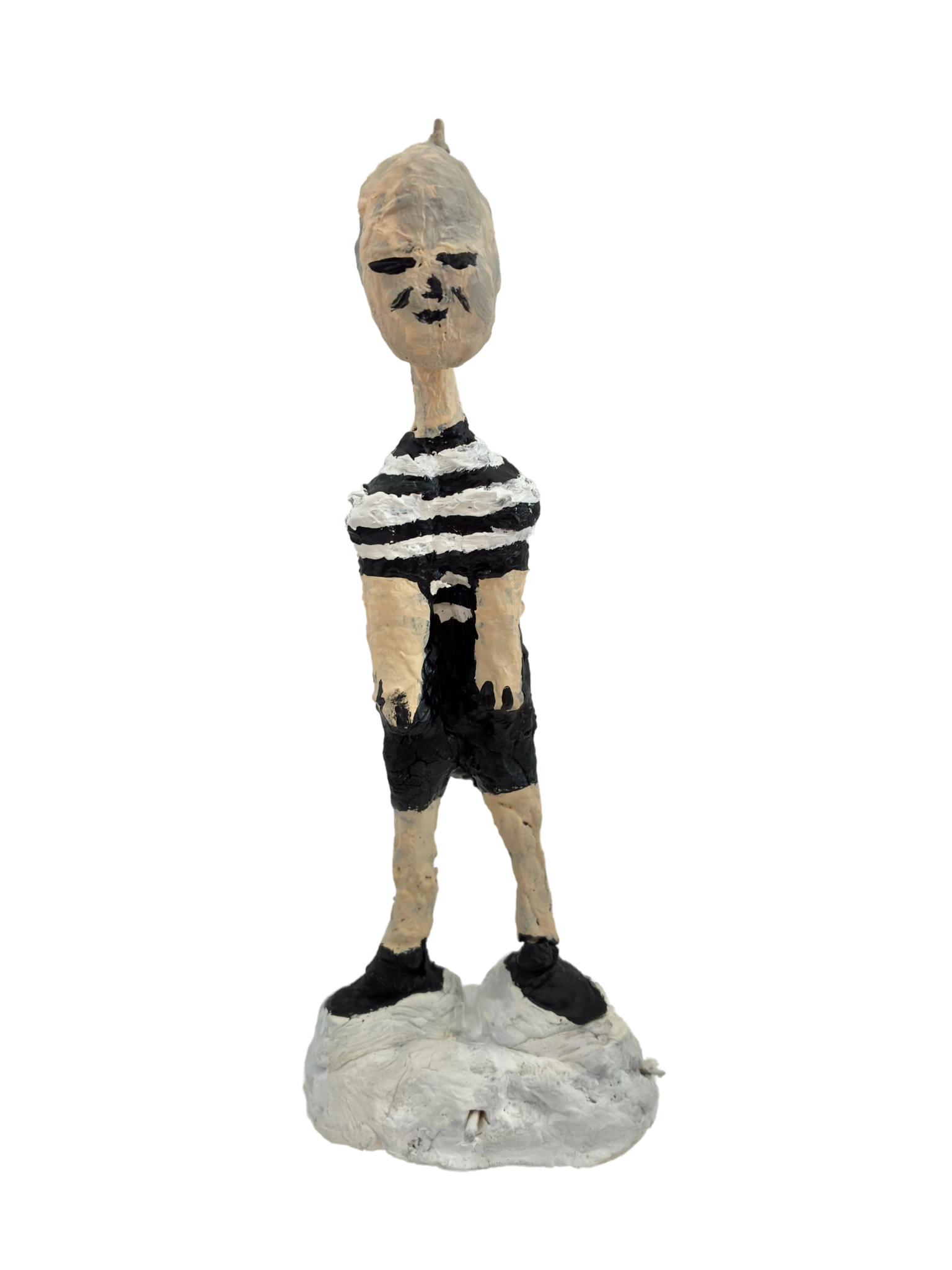
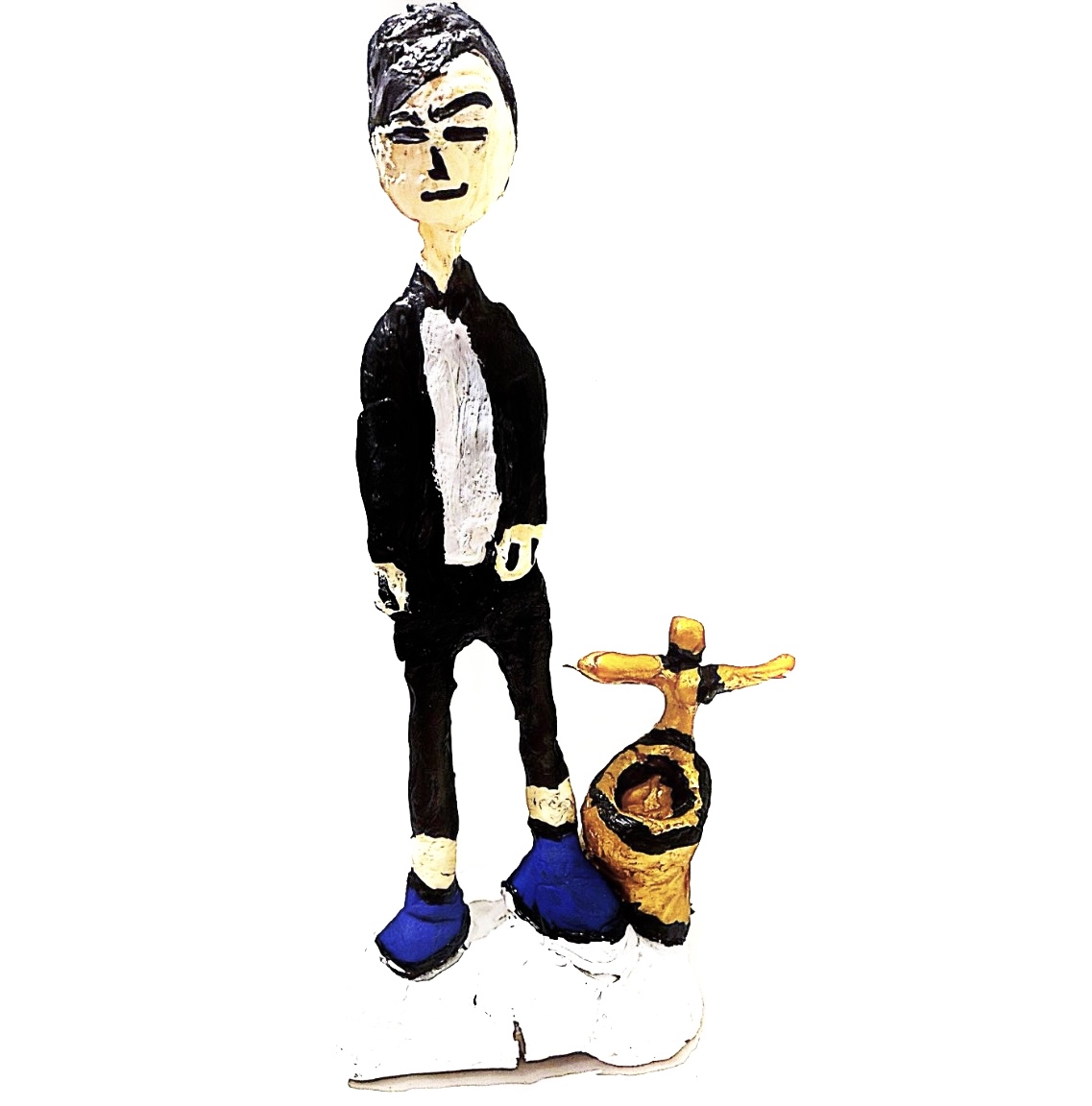
Eidelstein works in a lineage long misunderstood by institutional art history—a lineage of makers who favor intuition over orthodoxy, immediacy over refinement, idiosyncrasy over etiquette. His figures possess that unmistakable quality: the unruly confidence of someone who learned to make things before learning to doubt them. No smooth surfaces here. No industrial precision. No sterile polish. These sculptures look as though they willed themselves into being. Each artist in his mini pantheon is rendered with just enough detail to be recognizable and just enough distortion to be dangerous.
The titles reinforce this collapse of distance. Eidelstein refers to his subjects only by their first names—Andy, Frida, Marcel, Yayoi—as if calling out to friends on a playground or invoking figures from a half-remembered myth. Stripped of surnames, the artists shed their institutional weight and historical armor. What remains is something closer to familiarity than reverence, intimacy without reverence’s stiffness.
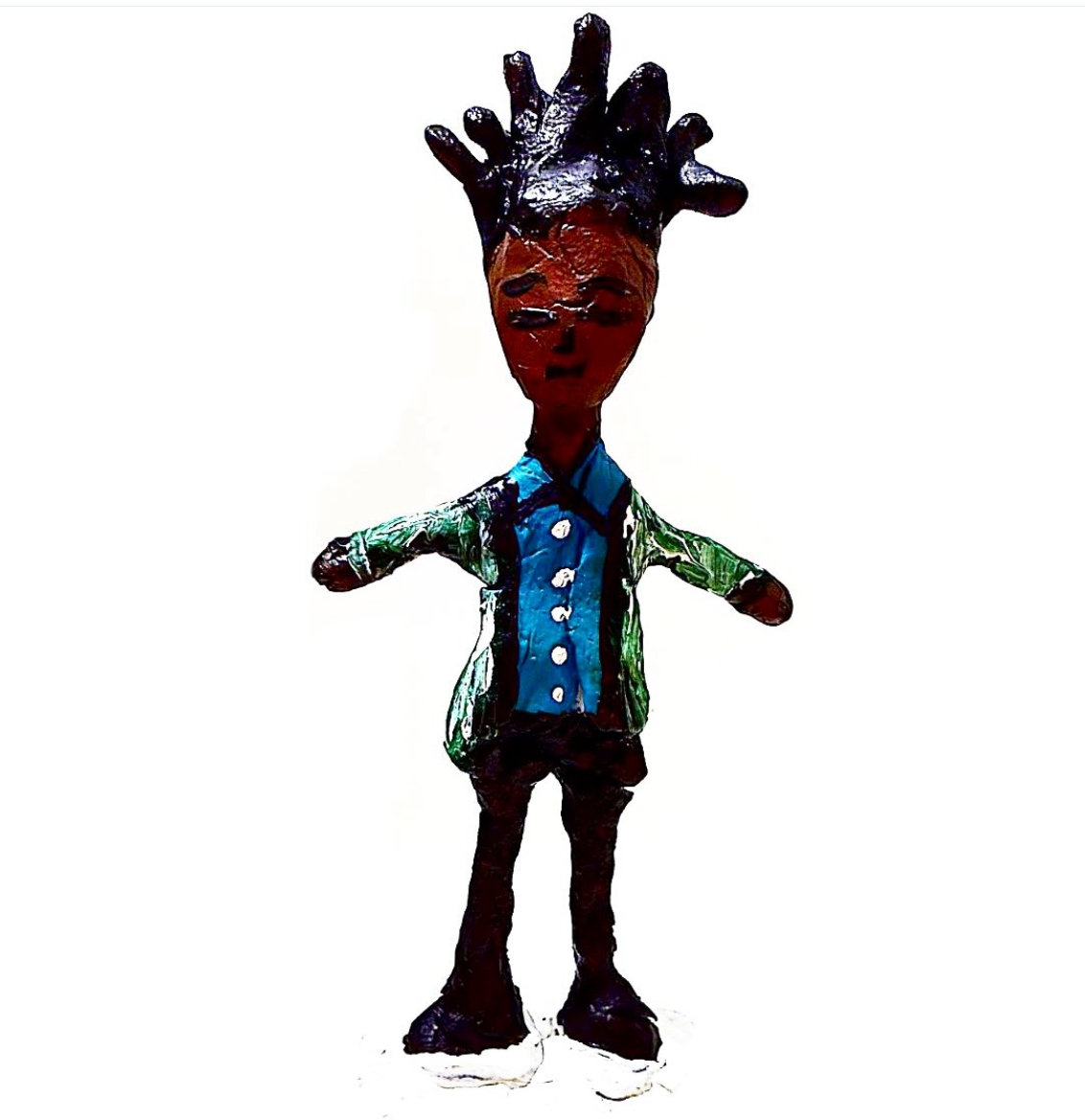
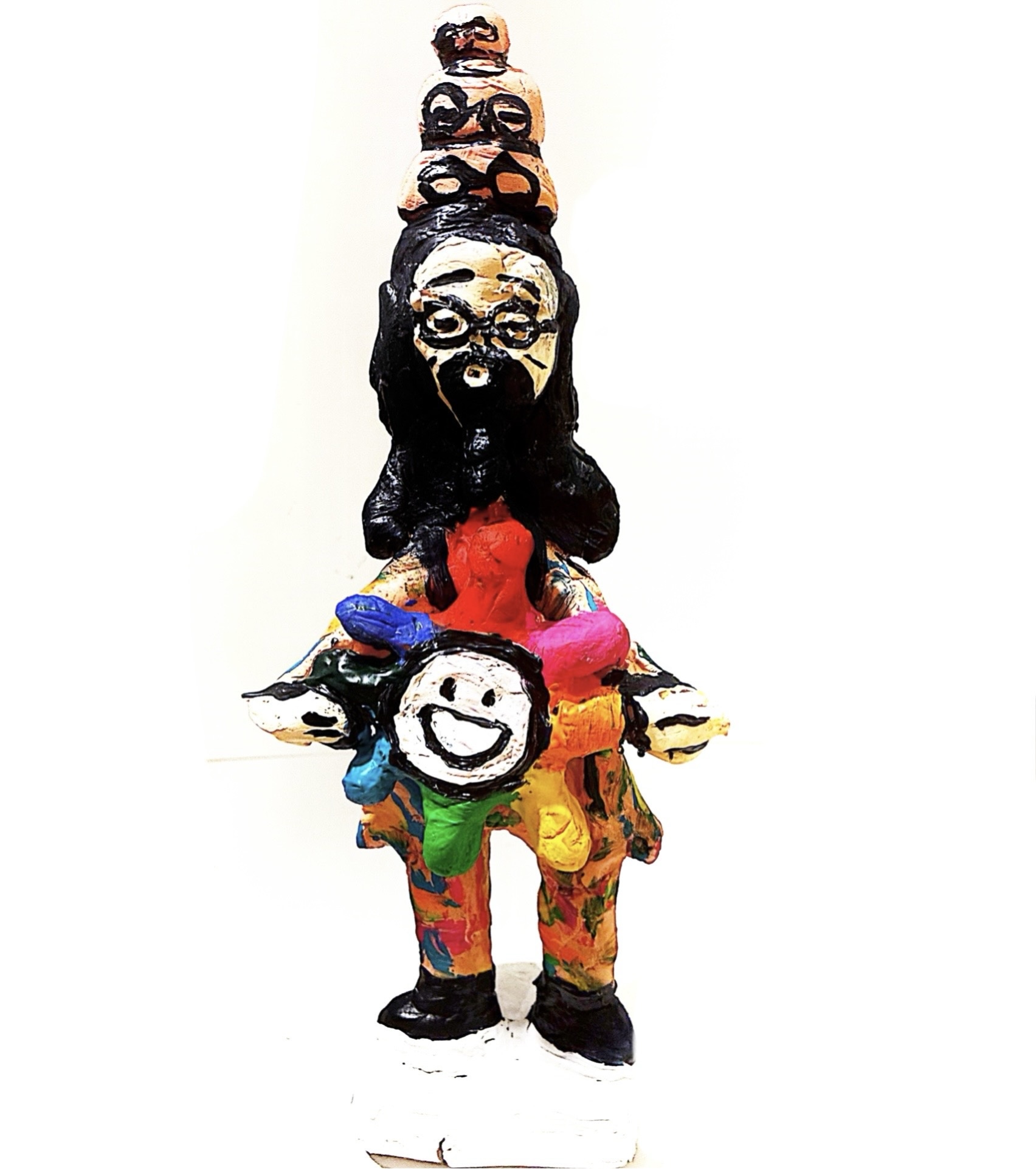
Warhol appears as an existential Pez dispenser—iconic, hollow, and ready to dispense cultural calories on demand. Duchamp looks irritated to find himself embodied at all, as if representation were a clerical error. Basquiat is a tiny meteor of swagger, faithfully unstable. Kusama resembles a mobile shrine assembled during a period of mass hallucination. Dalí seems shocked that someone else dared to handle his image without gloves. Koons radiates the eerie cheer of a character destined for merchandise.
By reimagining these figures at toy scale, Eidelstein exposes the absurdity of our art-historical hero worship. The great avant-gardes of the last century—those self-appointed destroyers of convention—have ossified into a new orthodoxy so rigid that only a twenty-five-centimeter figurine can loosen it. The gesture is irreverent, but it is also diagnostic: Strip away the theoretical apparatus, and what remains is a cast of characters remarkably similar to the ones children invent when left alone with markers and wet clay.
This is not parody. It is taxonomy. Eidelstein returns these artists to the ecosystem from which artistic invention originally springs: the place where imagination precedes literacy, where making precedes interpretation, where the hand outruns the intellect. His figures carry the unmistakable aura of objects created at the margins—objects disobedient to taste, indifferent to prestige, and accident prone in the best possible way.
In reducing the giants of modern and contemporary art to small, lumpy, exuberant creatures, Eidelstein achieves something our museums, markets, and monographs rarely manage: He frees them. He pulls them back from sanctity into the realm of play, where they should have been all along. They stand not as monuments, but as escapees.
Andres Eidelstein (born 1993) is a Buenos Aires–based, self-taught artist working in drawing and small-scale figurative sculpture. Using porcelain and polymer clay, he creates compact, hand-formed figures of artists, musicians, fashion icons, religious figures, cartoon characters, and celebrities drawn from shared visual culture. His bold lines and quick handling favor immediacy over refinement. He began drawing in 2012 and sculpting in 2016, developing a language grounded in recognizability, distortion, and scale. Slightly crooked and deliberately uneven, his toy-size figures shed monumentality and return as intimate, tactile presences. Famous names are often reduced to first names, collapsing distance and replacing reverence with familiarity. Working from home and outside academic structures, Eidelstein relies on persistence rather than theory. His figures hover between portrait and object, placing disparate characters side by side to reveal the odd equivalences of contemporary fame. By working small and close to the hand, he restores a sense of play and vulnerability to representation.
Scholars have spent decades inflating the reputations of artists such as Andy Warhol, Yayoi Kusama, Jean-Michel Basquiat, Marcel Duchamp, Frida Kahlo, Jeff Koons, and others into a kind of cultural weather system—vast, unmanageable, and perpetually self-renewing. Argentine artist Andres Eidelstein does the opposite. He compresses them to approximately twenty-five centimeters, roughly the height of an action figure, or an idol improvised by a particularly imaginative child. The results are both oddly devotional and quietly mutinous.
Eidelstein works in a lineage long misunderstood by institutional art history—a lineage of makers who favor intuition over orthodoxy, immediacy over refinement, idiosyncrasy over etiquette. His figures possess that unmistakable quality: the unruly confidence of someone who learned to make things before learning to doubt them. No smooth surfaces here. No industrial precision. No sterile polish. These sculptures look as though they willed themselves into being. Each artist in his mini pantheon is rendered with just enough detail to be recognizable and just enough distortion to be dangerous.
The titles reinforce this collapse of distance. Eidelstein refers to his subjects only by their first names—Andy, Frida, Marcel, Yayoi—as if calling out to friends on a playground or invoking figures from a half-remembered myth. Stripped of surnames, the artists shed their institutional weight and historical armor. What remains is something closer to familiarity than reverence, intimacy without reverence’s stiffness.
Warhol appears as an existential Pez dispenser—iconic, hollow, and ready to dispense cultural calories on demand. Duchamp looks irritated to find himself embodied at all, as if representation were a clerical error. Basquiat is a tiny meteor of swagger, faithfully unstable. Kusama resembles a mobile shrine assembled during a period of mass hallucination. Dalí seems shocked that someone else dared to handle his image without gloves. Koons radiates the eerie cheer of a character destined for merchandise.
By reimagining these figures at toy scale, Eidelstein exposes the absurdity of our art-historical hero worship. The great avant-gardes of the last century—those self-appointed destroyers of convention—have ossified into a new orthodoxy so rigid that only a twenty-five-centimeter figurine can loosen it. The gesture is irreverent, but it is also diagnostic: Strip away the theoretical apparatus, and what remains is a cast of characters remarkably similar to the ones children invent when left alone with markers and wet clay.
This is not parody. It is taxonomy. Eidelstein returns these artists to the ecosystem from which artistic invention originally springs: the place where imagination precedes literacy, where making precedes interpretation, where the hand outruns the intellect. His figures carry the unmistakable aura of objects created at the margins—objects disobedient to taste, indifferent to prestige, and accident prone in the best possible way.
In reducing the giants of modern and contemporary art to small, lumpy, exuberant creatures, Eidelstein achieves something our museums, markets, and monographs rarely manage: He frees them. He pulls them back from sanctity into the realm of play, where they should have been all along. They stand not as monuments, but as escapees.
Andres Eidelstein (born 1993) is a Buenos Aires–based, self-taught artist working in drawing and small-scale figurative sculpture. Using porcelain and polymer clay, he creates compact, hand-formed figures of artists, musicians, fashion icons, religious figures, cartoon characters, and celebrities drawn from shared visual culture. His bold lines and quick handling favor immediacy over refinement. He began drawing in 2012 and sculpting in 2016, developing a language grounded in recognizability, distortion, and scale. Slightly crooked and deliberately uneven, his toy-size figures shed monumentality and return as intimate, tactile presences. Famous names are often reduced to first names, collapsing distance and replacing reverence with familiarity. Working from home and outside academic structures, Eidelstein relies on persistence rather than theory. His figures hover between portrait and object, placing disparate characters side by side to reveal the odd equivalences of contemporary fame. By working small and close to the hand, he restores a sense of play and vulnerability to representation.
Scholars have spent decades inflating the reputations of artists such as Andy Warhol, Yayoi Kusama, Jean-Michel Basquiat, Marcel Duchamp, Frida Kahlo, Jeff Koons, and others into a kind of cultural weather system—vast, unmanageable, and perpetually self-renewing. Argentine artist Andres Eidelstein does the opposite. He compresses them to approximately twenty-five centimeters, roughly the height of an action figure, or an idol improvised by a particularly imaginative child. The results are both oddly devotional and quietly mutinous.
Eidelstein works in a lineage long misunderstood by institutional art history—a lineage of makers who favor intuition over orthodoxy, immediacy over refinement, idiosyncrasy over etiquette. His figures possess that unmistakable quality: the unruly confidence of someone who learned to make things before learning to doubt them. No smooth surfaces here. No industrial precision. No sterile polish. These sculptures look as though they willed themselves into being. Each artist in his mini pantheon is rendered with just enough detail to be recognizable and just enough distortion to be dangerous.
The titles reinforce this collapse of distance. Eidelstein refers to his subjects only by their first names—Andy, Frida, Marcel, Yayoi—as if calling out to friends on a playground or invoking figures from a half-remembered myth. Stripped of surnames, the artists shed their institutional weight and historical armor. What remains is something closer to familiarity than reverence, intimacy without reverence’s stiffness.
Warhol appears as an existential Pez dispenser—iconic, hollow, and ready to dispense cultural calories on demand. Duchamp looks irritated to find himself embodied at all, as if representation were a clerical error. Basquiat is a tiny meteor of swagger, faithfully unstable. Kusama resembles a mobile shrine assembled during a period of mass hallucination. Dalí seems shocked that someone else dared to handle his image without gloves. Koons radiates the eerie cheer of a character destined for merchandise.
By reimagining these figures at toy scale, Eidelstein exposes the absurdity of our art-historical hero worship. The great avant-gardes of the last century—those self-appointed destroyers of convention—have ossified into a new orthodoxy so rigid that only a twenty-five-centimeter figurine can loosen it. The gesture is irreverent, but it is also diagnostic: Strip away the theoretical apparatus, and what remains is a cast of characters remarkably similar to the ones children invent when left alone with markers and wet clay.
This is not parody. It is taxonomy. Eidelstein returns these artists to the ecosystem from which artistic invention originally springs: the place where imagination precedes literacy, where making precedes interpretation, where the hand outruns the intellect. His figures carry the unmistakable aura of objects created at the margins—objects disobedient to taste, indifferent to prestige, and accident prone in the best possible way.
In reducing the giants of modern and contemporary art to small, lumpy, exuberant creatures, Eidelstein achieves something our museums, markets, and monographs rarely manage: He frees them. He pulls them back from sanctity into the realm of play, where they should have been all along. They stand not as monuments, but as escapees.
Andres Eidelstein (born 1993) is a Buenos Aires–based, self-taught artist working in drawing and small-scale figurative sculpture. Using porcelain and polymer clay, he creates compact, hand-formed figures of artists, musicians, fashion icons, religious figures, cartoon characters, and celebrities drawn from shared visual culture. His bold lines and quick handling favor immediacy over refinement. He began drawing in 2012 and sculpting in 2016, developing a language grounded in recognizability, distortion, and scale. Slightly crooked and deliberately uneven, his toy-size figures shed monumentality and return as intimate, tactile presences. Famous names are often reduced to first names, collapsing distance and replacing reverence with familiarity. Working from home and outside academic structures, Eidelstein relies on persistence rather than theory. His figures hover between portrait and object, placing disparate characters side by side to reveal the odd equivalences of contemporary fame. By working small and close to the hand, he restores a sense of play and vulnerability to representation.
Scholars have spent decades inflating the reputations of artists such as Andy Warhol, Yayoi Kusama, Jean-Michel Basquiat, Marcel Duchamp, Frida Kahlo, Jeff Koons, and others into a kind of cultural weather system—vast, unmanageable, and perpetually self-renewing. Argentine artist Andres Eidelstein does the opposite. He compresses them to approximately twenty-five centimeters, roughly the height of an action figure, or an idol improvised by a particularly imaginative child. The results are both oddly devotional and quietly mutinous.
Eidelstein works in a lineage long misunderstood by institutional art history—a lineage of makers who favor intuition over orthodoxy, immediacy over refinement, idiosyncrasy over etiquette. His figures possess that unmistakable quality: the unruly confidence of someone who learned to make things before learning to doubt them. No smooth surfaces here. No industrial precision. No sterile polish. These sculptures look as though they willed themselves into being. Each artist in his mini pantheon is rendered with just enough detail to be recognizable and just enough distortion to be dangerous.
The titles reinforce this collapse of distance. Eidelstein refers to his subjects only by their first names—Andy, Frida, Marcel, Yayoi—as if calling out to friends on a playground or invoking figures from a half-remembered myth. Stripped of surnames, the artists shed their institutional weight and historical armor. What remains is something closer to familiarity than reverence, intimacy without reverence’s stiffness.
Warhol appears as an existential Pez dispenser—iconic, hollow, and ready to dispense cultural calories on demand. Duchamp looks irritated to find himself embodied at all, as if representation were a clerical error. Basquiat is a tiny meteor of swagger, faithfully unstable. Kusama resembles a mobile shrine assembled during a period of mass hallucination. Dalí seems shocked that someone else dared to handle his image without gloves. Koons radiates the eerie cheer of a character destined for merchandise.
By reimagining these figures at toy scale, Eidelstein exposes the absurdity of our art-historical hero worship. The great avant-gardes of the last century—those self-appointed destroyers of convention—have ossified into a new orthodoxy so rigid that only a twenty-five-centimeter figurine can loosen it. The gesture is irreverent, but it is also diagnostic: Strip away the theoretical apparatus, and what remains is a cast of characters remarkably similar to the ones children invent when left alone with markers and wet clay.
This is not parody. It is taxonomy. Eidelstein returns these artists to the ecosystem from which artistic invention originally springs: the place where imagination precedes literacy, where making precedes interpretation, where the hand outruns the intellect. His figures carry the unmistakable aura of objects created at the margins—objects disobedient to taste, indifferent to prestige, and accident prone in the best possible way.
In reducing the giants of modern and contemporary art to small, lumpy, exuberant creatures, Eidelstein achieves something our museums, markets, and monographs rarely manage: He frees them. He pulls them back from sanctity into the realm of play, where they should have been all along. They stand not as monuments, but as escapees.
Andres Eidelstein (born 1993) is a Buenos Aires–based, self-taught artist working in drawing and small-scale figurative sculpture. Using porcelain and polymer clay, he creates compact, hand-formed figures of artists, musicians, fashion icons, religious figures, cartoon characters, and celebrities drawn from shared visual culture. His bold lines and quick handling favor immediacy over refinement. He began drawing in 2012 and sculpting in 2016, developing a language grounded in recognizability, distortion, and scale. Slightly crooked and deliberately uneven, his toy-size figures shed monumentality and return as intimate, tactile presences. Famous names are often reduced to first names, collapsing distance and replacing reverence with familiarity. Working from home and outside academic structures, Eidelstein relies on persistence rather than theory. His figures hover between portrait and object, placing disparate characters side by side to reveal the odd equivalences of contemporary fame. By working small and close to the hand, he restores a sense of play and vulnerability to representation.

Andres Eidelstein
Pablo
2025
Porcelain polymer, toothpicks, wooden sticks, acrylic paint
24 × 9 × 3 cm (9.5 × 3.5 × 1.2 in.)

Andres Eidelstein
Maurizio
2025
Porcelain polymer, toothpicks, wooden sticks, acrylic paint
25 8.5 × 5.5 cm (9.8 × 3.4 × 2.2 in.)

Andres Eidelstein
Louise
2025
Porcelain polymer, toothpicks, wooden sticks, acrylic paint
26 × 9 × 5 cm (10.2 × 3.5 × 2 in.)

Andres Eidelstein
Marina
2025
Porcelain polymer, toothpicks, wooden sticks, acrylic paint
25 × 9 × 4 cm (9.8 × 3.5 × 1.6 in.)

Andres Eidelstein
Andy
2025
Porcelain polymer, toothpicks, wooden sticks, acrylic paint
25 × 7.5 × 3.5 cm (9.8 × 3 × 1.4 in.)

Andres Eidelstein
Jeff
2025
Porcelain polymer, toothpicks, wooden sticks, acrylic paint
25.5 × 8.5 × 4.5 cm (10 × 3.4 × 1.8 in.)

Andres Eidelstein
Yayoi
2025
Porcelain polymer, toothpicks, wooden sticks, acrylic paint
23.5 × 8.5 × 5 cm (9.3 × 3.4 × 2 in.)


Andres Eidelstein
Jean-Michel
2025
Porcelain polymer, toothpicks, wooden sticks, acrylic paint
27 × 9 × 3.5 cm (10.6 × 3.5 × 1.4 in.)

Andres Eidelstein
Takashi
2025
Porcelain polymer, toothpicks, wooden sticks, acrylic paint
27.5 × 7 × 5 cm (10.8 × 2.8 × 2 in.)

Andres Eidelstein
Marcel
2025
Porcelain polymer, toothpicks, wooden sticks, acrylic paint
26 × 7 × 6 cm (10.2 × 2.8 × 2.4 in.)

Andres Eidelstein
Salvador
2025
Porcelain polymer, toothpicks, wooden sticks, acrylic paint
25 × 8.5 × 5.5 cm (9.8 × 3.4 × 2.2 in.)

Andres Eidelstein
David
2025
Porcelain polymer, toothpicks, wooden sticks, acrylic paint
25 × 7.5 × 4 cm (9.8 × 3 × 1.6 in.)

Andres Eidelstein
Frida
2025
Porcelain polymer, toothpicks, wooden sticks, acrylic paint
27 × 8 × 6 cm (10.6 × 3.2 × 2.4 in.)